
Best Center for Pain Relief and the Treatments They Offer
Introduction
Here is a question worth sitting with for a moment. How long have you been living with your pain?
A few weeks? Several months? Years? If you are honest with yourself, the answer is probably longer than it should be. Most people with chronic pain spend a significant portion of their lives cycling through the same ineffective treatments, taking medicines that only partially work, resting when the pain flares and simply learning to live with a reduced version of their life.
The missing piece in most of these stories is access to the right center for pain relief. Not a general hospital. Not a family doctor prescribing the same painkiller on repeat. A dedicated, specialist-led center for pain relief that has the diagnostic tools, the clinical expertise and the advanced treatment options to actually address the root cause of your pain.
This article explains what the best pain relief centers offer, what treatments they provide and how to recognise when you have found one that is genuinely equipped to help you.
Why Most Pain Patients Never Find Lasting Relief
Before exploring what a quality center for pain relief looks like, it is worth understanding why so many patients fail to find lasting improvement despite years of trying.
The core problem is this. Pain, especially chronic pain, is rarely a simple problem with a simple solution. It involves complex interactions between damaged tissues, irritated nerves, joint degeneration, muscular compensation patterns and in many cases, changes in how the nervous system processes pain signals over time.
When a general practitioner prescribes an anti-inflammatory for back pain, they are treating a symptom. When a physiotherapist gives exercises without knowing whether a disc herniation is compressing a nerve, they may be working around the actual problem. When a patient takes painkillers for months without a proper diagnosis, they are managing discomfort rather than addressing its source.
A dedicated center for pain relief approaches the problem differently. It starts with understanding precisely what is generating the pain signal, then applies the most targeted and effective intervention available to interrupt or eliminate it.
What Makes a Center for Pain Relief Genuinely Effective
Not every clinic that uses the word pain in its name qualifies as a true center for pain relief. The best ones share a set of defining characteristics that separate them from ordinary medical facilities.
Specialist-Led Care With Dedicated Pain Medicine Training
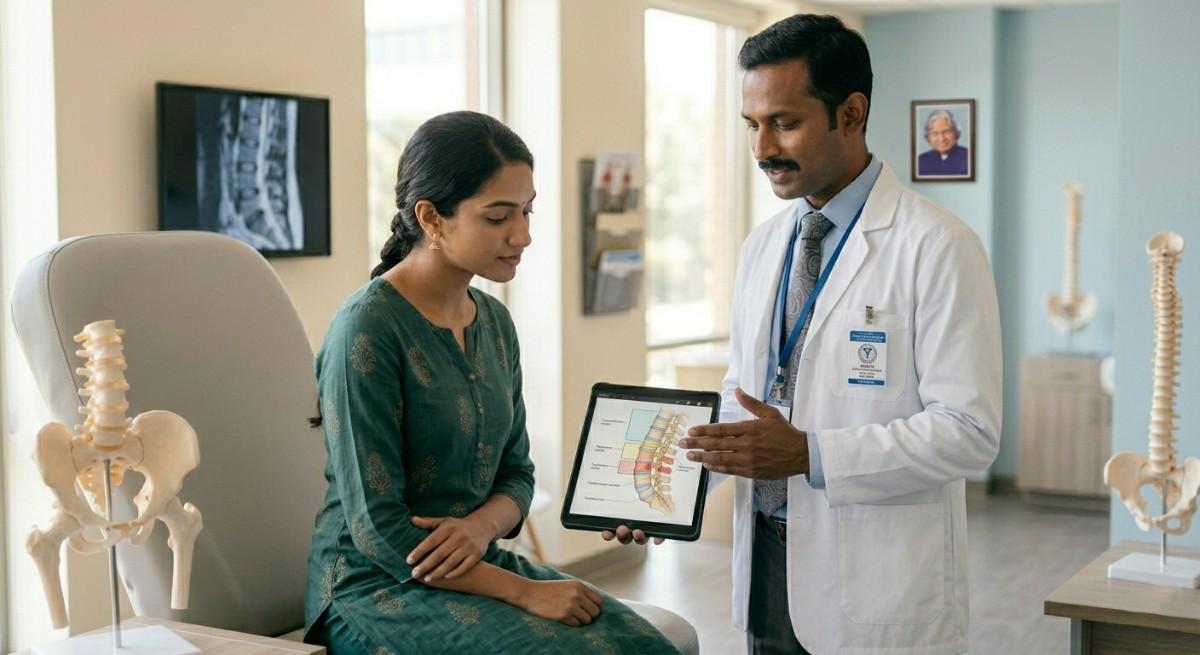
The quality of a pain center begins and ends with the expertise of its doctors. Pain medicine is a recognised medical specialty that requires specific postgraduate training beyond general medicine, orthopaedics or neurology. A qualified pain specialist understands the full spectrum of pain conditions and has hands-on training in advanced interventional procedures.
This matters because the breadth of treatment options available to a pain specialist far exceeds what a general practitioner or even a surgeon can offer. Pain specialists are trained to think beyond the surgical solution and to apply minimally invasive techniques that carry far lower risk and often deliver comparable or superior outcomes.
Comprehensive Diagnostic Evaluation Before Any Treatment
The best pain relief centers do not recommend procedures at the first appointment without a thorough understanding of what is causing the pain. Effective diagnosis typically involves:
- Detailed clinical history covering pain location, character, duration, aggravating and relieving factors
- Neurological assessment to identify nerve involvement
- Review of imaging including MRI and CT scans
- Diagnostic nerve blocks in some cases to precisely identify the pain source
- Assessment of how the pain is affecting the patient's sleep, mobility, work and emotional wellbeing
A center that skips this evaluation and moves straight to procedures is not practicing evidence-based pain medicine.
A Full Range of Non-Surgical Treatment Options
This is perhaps the most telling indicator of a high-quality pain relief center. The breadth of its non-surgical treatment menu reflects both the expertise of its specialists and its commitment to avoiding unnecessary surgery.
Treatments Offered at the Best Centers for Pain Relief
The following represents the range of treatments you should expect from a truly comprehensive center for pain relief. This is what distinguishes a specialist pain clinic from a general medical facility.
Epidural Steroid Injections
One of the most widely used and well-researched interventional pain procedures, epidural steroid injections deliver a combination of corticosteroid and local anaesthetic directly into the epidural space around the spinal cord. This reduces inflammation around compressed or irritated nerves and provides targeted relief for conditions including disc herniation, sciatica, spinal stenosis and cervical radiculopathy.
The procedure is performed under fluoroscopic guidance to ensure precision. Patients often experience significant relief within a few days and the effect can last for several months, during which time physiotherapy and rehabilitation can progress more effectively.
Radiofrequency Ablation
For pain arising from the facet joints of the spine, radiofrequency ablation is one of the most effective long-term solutions available without surgery. The procedure uses heat generated by radio waves to disrupt the nerve fibres transmitting pain signals from the damaged joint.
The results are significantly longer lasting than injections alone. Most patients experience relief for 12 months to 3 years. At advanced pain relief centers, Cooled Radiofrequency Ablation is also available, which treats a larger target area and is particularly effective for sacroiliac joint pain and certain types of knee pain.
Transforaminal Epidural Adhesiolysis
When scar tissue or adhesions form around nerve roots following disc disease, inflammation or previous spinal surgery, standard epidural injections may not reach the target effectively. Transforaminal epidural adhesiolysis is a specialised procedure that breaks down these adhesions and delivers medication precisely where it is needed.
This treatment is particularly valuable for patients with failed back surgery syndrome, persistent radiculopathy or complex nerve root involvement.
Sacroiliac Joint Injection and Cooled RFA
The sacroiliac joint, which connects the pelvis to the lower spine, is a frequently overlooked source of lower back pain and buttock pain. Many patients are treated for lumbar disc disease when the actual pain generator is the sacroiliac joint.
A quality center for pain relief will assess this joint specifically and offer both diagnostic injections to confirm it as the pain source and cooled radiofrequency ablation to provide lasting relief.
Knee Genicular Nerve Cooled Radiofrequency Ablation
For patients with chronic knee pain due to arthritis who are not candidates for or who wish to avoid knee replacement surgery, genicular nerve cooled radiofrequency ablation is a transformative option. The procedure targets the specific nerves that transmit pain signals from the knee joint, providing sustained relief that allows patients to return to normal activities without the recovery burden of surgery.
Sympathetic Nerve Blocks and Neurolysis
For pain conditions involving the sympathetic nervous system, including complex regional pain syndrome, vascular pain and certain types of visceral pain, sympathetic nerve blocks deliver targeted anaesthetic to the relevant nerve chain. In cases where longer-lasting relief is needed, neurolysis or radiofrequency ablation of the sympathetic ganglia can be performed.
Spinal Cord Stimulation
For patients with severe, treatment-resistant chronic pain including failed back surgery syndrome, complex regional pain syndrome and intractable nerve pain, spinal cord stimulation represents one of the most advanced options available. A small device placed near the spinal cord delivers controlled electrical impulses that modify pain signals before they reach the brain.
Most centers offering this treatment provide a trial period first, allowing patients to experience the benefit before committing to permanent implantation. Success rates for appropriately selected patients are consistently high in published clinical literature.
Intrathecal Drug Delivery
For patients with severe chronic pain, particularly cancer-related pain or extreme neuropathic pain that has not responded to other treatments, intrathecal drug delivery involves implanting a small pump that delivers pain medication directly into the fluid surrounding the spinal cord. This allows much smaller doses to achieve much greater effect compared to oral medication, significantly reducing systemic side effects.
Musculoskeletal Trigger Point Injections
Not all chronic pain has a structural spinal or joint origin. Many patients suffer from persistent myofascial pain driven by active trigger points within muscles. These tight, hyperirritable bands of muscle cause both local and referred pain patterns.
Trigger point injections using local anaesthetic break the pain-spasm cycle and provide immediate and often lasting relief when combined with appropriate stretching and physiotherapy.
Provocative Discography
When the specific disc causing pain needs to be identified before any intervention, provocative discography is used to reproduce the patient's exact pain by pressurising individual discs in a controlled environment. This diagnostic procedure ensures that any subsequent treatment targets precisely the right level of the spine.
Oral Medicine vs Interventional Pain Treatment: A Practical Comparison
Many patients come to a pain relief center having spent months or years on oral medication. Understanding how interventional treatment differs helps set realistic expectations.
| Factor | Oral Medication | Interventional Pain Treatment |
|---|---|---|
| Mechanism | Systemic, affects whole body | Targeted, acts at pain source |
| Speed of onset | Hours to days | Days |
| Duration of relief | Short term, requires daily dosing | Weeks to years depending on procedure |
| Side effect burden | Higher with long-term use | Very low with image-guided procedures |
| Treats the cause | Rarely | Often directly |
| Suitable for nerve pain | Partial | Highly effective |
| Suitable for joint pain | Partial | Highly effective |
The most effective pain management approach is usually a combination of appropriate medication in the short term alongside targeted interventional treatment to address the underlying cause.
The Role of Early Intervention in Chronic Pain
One of the most consistent findings in pain medicine research is that early treatment leads to better outcomes. When pain is left untreated for months or years, changes occur in how the nervous system processes pain signals, a phenomenon called central sensitisation. Once this develops, pain becomes harder to treat effectively because the nervous system itself has become hypersensitive.
Visiting a center for pain relief early, rather than waiting until pain has become severe and chronic, significantly improves the likelihood of achieving complete or near-complete relief with less intensive treatment.
This is particularly relevant for conditions like sciatica, slipped disc and facet joint arthritis, where early interventional treatment can prevent permanent nerve damage and joint deterioration.
Why Vedant Pain Management Clinic Is the Leading Center for Pain Relief in Faridabad
For patients across Faridabad and Delhi NCR, Vedant Pain Management Clinic represents the standard of care described throughout this article. It is not simply a clinic that offers pain injections. It is a fully equipped, specialist-led center for pain relief that covers the complete spectrum of advanced pain treatments.
Led by Dr. Mohit Gupta, whose expertise in interventional pain medicine is recognised across Delhi NCR, Vedant Pain Management Clinic has built its reputation on results. More than 5,000 patients treated. A 95 percent patient satisfaction rate. Patients travelling from Gurgaon, Noida, Greater Noida, South Delhi and beyond because the level of care available here is not easily found elsewhere in the region.
What sets Vedant apart:
Complete diagnostic process. Every patient is thoroughly evaluated before any treatment is recommended. We do not guess and we do not rush.
Full interventional treatment menu. From epidural injections and radiofrequency ablation to cooled RFA, spinal cord stimulation, intrathecal pump therapy and everything in between, we offer the complete range of advanced pain procedures.
Image-guided precision. All procedures at Vedant are performed under fluoroscopic or ultrasound guidance. This is non-negotiable for both safety and effectiveness.
Non-surgical philosophy. Our fundamental commitment is to help every patient achieve the best possible outcome without surgery wherever this is medically appropriate. Surgery is recommended only when it is genuinely necessary.
Personalised treatment. No two patients are the same and no two treatment plans at Vedant are the same. Your treatment is designed around your specific condition, your pain pattern and your personal goals.
Ongoing monitoring and support. Pain management is a process. We follow up with every patient, adjust treatment plans where needed and ensure that the relief you achieve is maintained over time.
Recognising When You Need a Specialist Pain Relief Center
Many patients delay seeking specialist help longer than they should. Here are the clear signals that it is time to move beyond general medical care and visit a dedicated center for pain relief:
- Pain that has lasted longer than six to eight weeks despite basic treatment
- Pain that is severe enough to affect your sleep, work or ability to perform daily tasks
- Pain that radiates from the back down the leg or from the neck down the arm
- Numbness, tingling or weakness in the arms or legs alongside pain
- Pain that has been investigated but no clear treatment plan has been offered
- You have been told surgery is needed and want to know if there is a non-surgical alternative
- Multiple doctors have been unable to help you achieve meaningful relief
If any of these apply to you, a dedicated pain relief center is the appropriate next step.
Conclusion and Call to Action
Living with chronic pain is not something you have to accept. The right center for pain relief, staffed by properly trained specialists and equipped with advanced interventional treatments, can change the trajectory of your condition in ways that general medical care simply cannot match.
At Vedant Pain Management Clinic in Faridabad, we have helped thousands of patients from across Delhi NCR find real, lasting relief from conditions that had been affecting their lives for months and years. We are ready to do the same for you.
Take the first step toward a pain-free life. Book your consultation with Dr. Mohit Gupta at Vedant Pain Management Clinic today.
Call us at +91 8171244512 or visit us at House No. 21, Sector 9, Faridabad, Haryana. The right help is closer than you think.