
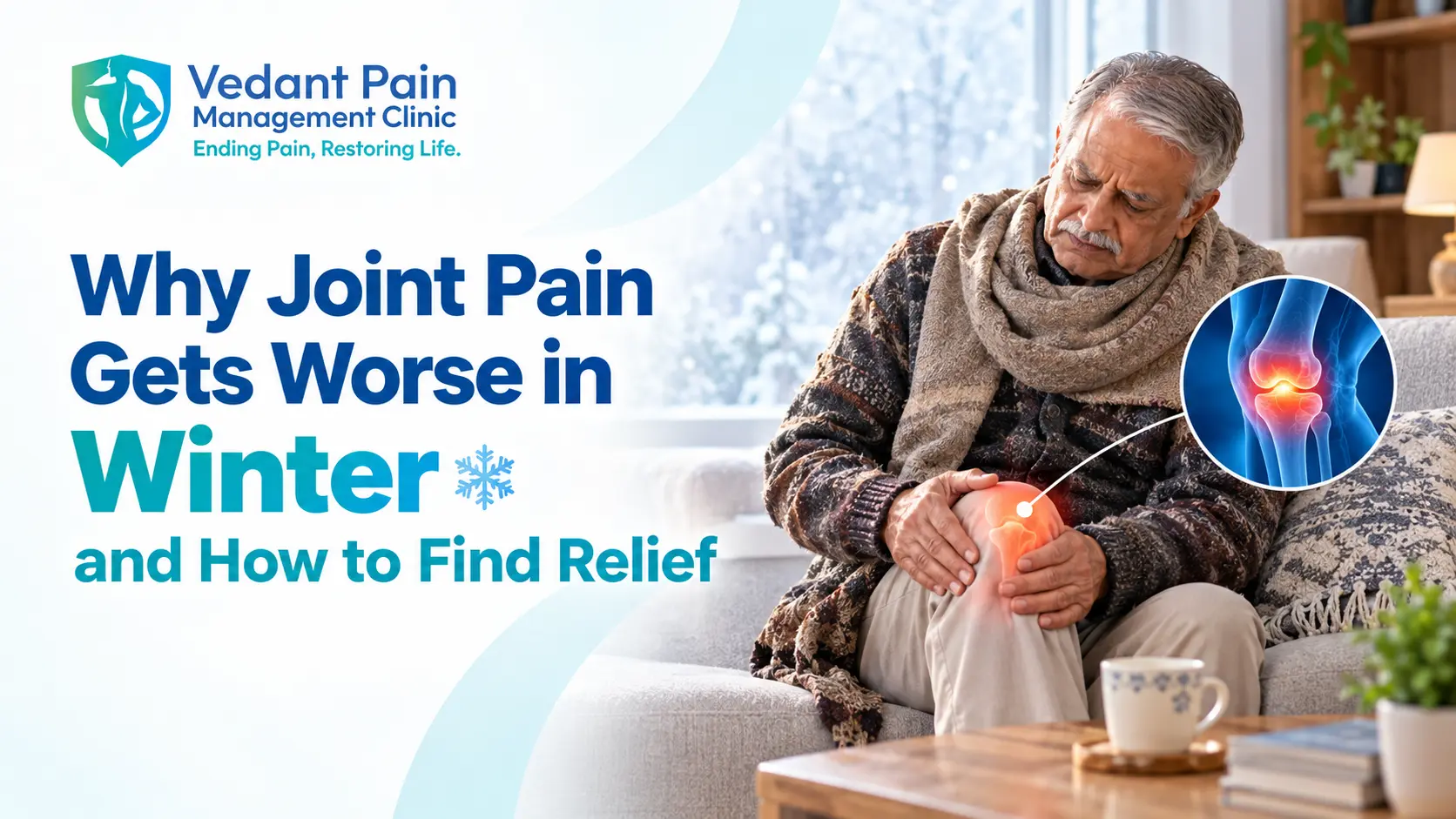
Why Joint Pain Gets Worse in Winter and How to Find Relief
Every year, when the first cold mornings arrive in Delhi NCR, my clinic fills up with the same complaints. A knee that was fine in September now protests on the stairs. A shoulder that never bothered anyone starts waking the patient at 3 a.m. Fingers stay stiff until the second cup of tea.
At Vedant Pain Management Clinic, we see this pattern every year from November to February. Many patients worry that their arthritis has suddenly become serious, or that something new has gone wrong. In most cases, the joint has not changed overnight. The cold has changed how your body behaves around that joint.
In this blog, I will explain in simple words why winter makes joint pain worse, what you can do at home to feel better, and when it is time to see a specialist.
Is Winter Joint Pain Real?
Yes, it is real, even though science is still working out the full explanation. Many people with arthritis and old injuries report more pain when the temperature drops. Studies on weather and pain have given mixed results, but what patients tell us in the clinic is remarkably consistent.
I never tell a patient that the pain is "just in the mind." Pain is a real experience, and cold weather affects the body in several ways that can add up. You can also read more about common pain symptoms and their causes on our website.
7 Reasons Cold Weather Makes Joints Hurt
1. Changes in air pressure
Before cold or rainy weather arrives, the air pressure around us usually falls. One theory is that this lets the tissues around a joint swell very slightly. In a healthy joint, you will never notice it. In a joint that is already inflamed or worn, that tiny bit of extra pressure on sensitive nerves can feel like a lot.
2. Reduced blood flow
When it is cold, your body protects its core by sending less blood to your hands, feet and limbs. Less blood flow means less warmth and less oxygen reaching the muscles and tissues around your joints. This is why fingers, toes and knees often complain first.
3. Thicker joint fluid
Your joints are cushioned by a natural lubricant called synovial fluid. Many patients describe the effect of cold as if the joint oil has turned thick. Whether or not that is the exact mechanism, the feeling of stiffness after sitting for a while, or first thing in the morning, is something almost everyone with joint trouble recognises.
4. Tight muscles
Cold makes muscles tense up. Tight muscles pull on tendons and joints and change the way you walk, sit and bend. A tight thigh muscle, for example, can make an already sore knee feel much worse.
5. Less movement
In winter, morning walks get skipped and evenings are spent under a blanket. The less a joint moves, the stiffer it gets, and the stiffer it gets, the more it hurts to move. It becomes a cycle that is hard to break without a push.
6. Less sunlight and low vitamin D
In winter, we spend less time in the sun, and many people in India already have low vitamin D levels. Low vitamin D is linked to bone and muscle aches. I recommend a simple blood test before taking any supplement, because the right dose differs from person to person.
7. Mood, sleep and pain sensitivity
Short days and cold weather can lower mood and disturb sleep. Poor sleep and low mood make the brain more sensitive to pain signals. So the same joint can feel more painful on a gloomy, sleepless week than on a bright, restful one.
Who Feels It the Most?
Anyone can notice stiffness in winter, but some people are affected more than others. In my experience, these groups come to us most often:
- People over 50 with knee osteoarthritis, hip arthritis or hand joint pain
- Patients with rheumatoid arthritis or other inflammatory joint conditions
- Anyone with an old fracture, ligament injury or joint surgery
- People with frozen shoulder, tennis elbow or heel pain
- Desk workers who sit for hours in cold, air-conditioned rooms
- Patients with nerve pain, such as diabetic neuropathy
If you fall into one of these groups, it helps to plan ahead before the cold sets in.
Simple Ways to Ease Joint Pain at Home
You do not need expensive gadgets to feel better. Small, steady habits do most of the work.
Dress in warm layers
Keep your knees, hands, neck and lower back covered. Thin layers trap warmth better than one heavy jacket. Woollen socks, gloves and a knee cap or shawl can make a real difference during early morning walks and long evenings.
Use gentle heat
A warm compress or hot water bag on a stiff joint for 15 to 20 minutes can relax muscles and improve blood flow. Wrap it in a towel so it never touches bare skin directly. If you have diabetes or reduced feeling in your feet, be extra careful, because you may not notice when something is too hot.
Warm up before you get out of bed
This is a tip I give almost every patient. Before you stand up in the morning, spend two or three minutes bending and straightening your knees, rotating your ankles and opening and closing your fists. Your joints need a little time to wake up in cold weather. For more routines, see our guided exercises for better movement and pain relief.
Keep moving every day
Aim for 20 to 30 minutes of gentle activity, even if it is indoors. Walking around the house, simple stretches, light yoga and stationary cycling all help. If you sit for work, stand up and move for a couple of minutes every hour.
Eat to support your joints
Include foods rich in protein, calcium and healthy fats, such as dal, curd, milk, nuts, seeds and fish if you eat it. Seasonal fruits and vegetables help control inflammation. Staying hydrated matters too, even though we feel less thirsty in winter. Our page on diet for pain management has more ideas.
Watch your weight
Every extra kilogram adds more load on your knees and hips, and that load multiplies with every step you take. Winter is often when weight creeps up, so keep an eye on it.
Get some sunlight
Try to spend 15 to 20 minutes outdoors in the late morning sun when you can. It lifts your mood and helps your body make vitamin D. A short sunny walk does both jobs at once.
Common Winter Mistakes I See in the Clinic
Over the years, I have noticed a few habits that make things worse.
- Stopping all exercise. Rest feels comfortable, but too much of it makes joints stiffer.
- Taking painkillers every day without advice. Regular use of anti-inflammatory tablets can affect the stomach, kidneys and blood pressure, especially in older adults.
- Using very hot water or heaters directly on the skin. This can cause burns and rashes.
- Waiting for the weather to change. Pain that lasts well beyond the cold spell needs a proper check, not more waiting.
- Believing that the pain is just old age. Age plays a role, but many causes of joint pain can be treated.
When to See a Specialist at Vedant Pain Management Clinic
Some stiffness in cold weather is normal. But please do not ignore the following signs:
- Pain that has lasted more than two to three weeks
- Swelling, redness or warmth in a joint
- Pain that wakes you up at night or is there even at rest
- A joint that locks, gives way or cannot take your weight
- Numbness, tingling or weakness in an arm or leg
- Difficulty with daily tasks like climbing stairs, dressing or holding a cup
If a joint suddenly becomes hot, red and very painful, especially with fever, do not wait for an appointment. Seek medical help the same day.
At Vedant Pain Management Clinic in Sector 9, Faridabad, the first step is always a proper examination and a clear diagnosis. Many patients are surprised to learn that what they thought was a knee problem is partly a back problem, or that a "shoulder issue" is actually coming from the neck, as in cervical radiculopathy. Treating the right source is what brings lasting relief.
Treatment Options Beyond Painkillers
Once we know what is causing your pain, we match the treatment to you. We do not push a single procedure for everyone. Depending on your condition, the options may include:
- Physiotherapy and pain rehabilitation to restore strength and movement
- Ultrasound-guided injections, such as tendon injections and bursa injections, to deliver medicine exactly where it is needed
- PRP injections for selected cases of tendon, ligament and knee problems
- Hydrodissection for nerve entrapment such as carpal tunnel syndrome
- Cooled radiofrequency ablation for long-standing knee or hip pain that has not improved with other measures
Most of these are minimally invasive, which means no large cuts and a faster return to daily life. Results vary from person to person, and nobody can promise a guaranteed outcome. What I can promise is an honest assessment and a plan that suits your needs. If you are comparing options, our treatments comparison page can help you understand the differences.
Do Not Let the Cold Decide How You Live
Winter does not have to mean months of aching knees and stiff hands. Understanding why the cold affects you is half the battle. Staying warm, staying active and getting early advice for pain that does not settle can keep you moving comfortably all season.
If you are in Faridabad, Delhi, Noida or anywhere in the NCR and your joint pain is getting in the way of your day, come and meet us. A short consultation can tell you what is going on and what can be done about it.
Read more: RFA vs Surgery: Which One's Right for You | How to Choose the Right Knee Pain Specialist in Faridabad
Book your consultation at Vedant Pain Management Clinic today.
📞 +91 8171244512 | 📍 House No. 21, Sector 9, Opposite Huda Market, Faridabad | 🕘 9 AM to 7 PM | Contact us