
Which Doctor To Go For Back Pain
If you have been Googling which doctor to go for back pain, chances are you have also come across a dozen conflicting opinions. Rest more. See an orthopedic. Try a chiropractor. Get an MRI immediately. Surgery is inevitable. Most of these are either incomplete or flat out wrong.
This article separates the myths from the facts, and walks you through exactly which doctor to see for back pain based on your specific symptoms, not generic advice that may not apply to your situation.
Myth 1: "Back Pain Always Means You Need an Orthopedic Surgeon"
Fact: Orthopedic surgeons specialize in bones, joints, and structural problems, and they are excellent for fractures, severe deformities, or cases clearly headed toward surgery. But most chronic back pain is not primarily a surgical problem. It often originates from nerves, soft tissue, or joint inflammation that responds well to non-surgical, targeted treatment.
Seeing an orthopedic surgeon first is not wrong, but it is often not the most direct path to relief, especially for pain caused by disc degeneration, facet joint irritation, or nerve compression.
Myth 2: "Painkillers and Rest Are Enough for Any Back Pain"
Fact: This works for short term, mechanical pain from minor strain. It does not work for chronic pain lasting beyond six weeks. Relying on medication alone without addressing the actual source of pain often leads to recurring flare ups and, in some cases, dependency on long term pain medication.
Chronic back pain needs a diagnosis-driven approach, not just symptom suppression.
Myth 3: "You Should See a General Physician First, Always"
Fact: A general physician is a reasonable starting point for new, mild back pain. But if your pain has already lasted weeks, returned multiple times, or comes with numbness, tingling, or weakness in the legs, going straight to a pain management specialist saves time and avoids the frustrating cycle of repeated basic consultations that lead nowhere.
Myth 4: "Back Surgery Is the Only Real Solution for Chronic Pain"
Fact: This is one of the most damaging myths. The majority of chronic back pain cases, including slipped disc and sciatica, respond well to non-surgical interventional treatments such as epidural injections, nerve blocks, and radiofrequency ablation. Surgery is generally reserved for cases involving severe nerve compression or spinal instability that does not improve with other treatments.
Myth 5: "A Pain Management Specialist Just Prescribes Stronger Medicine"
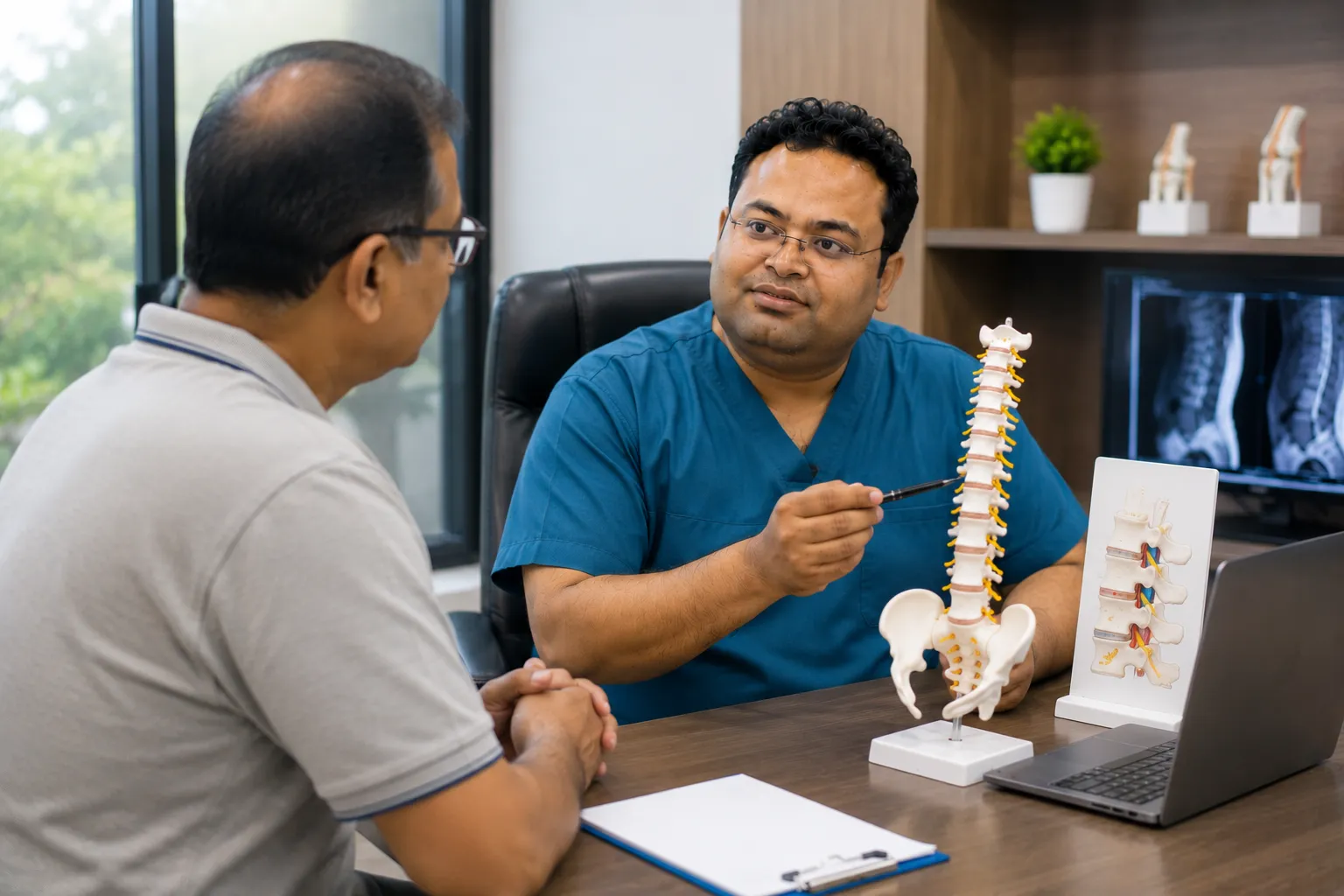
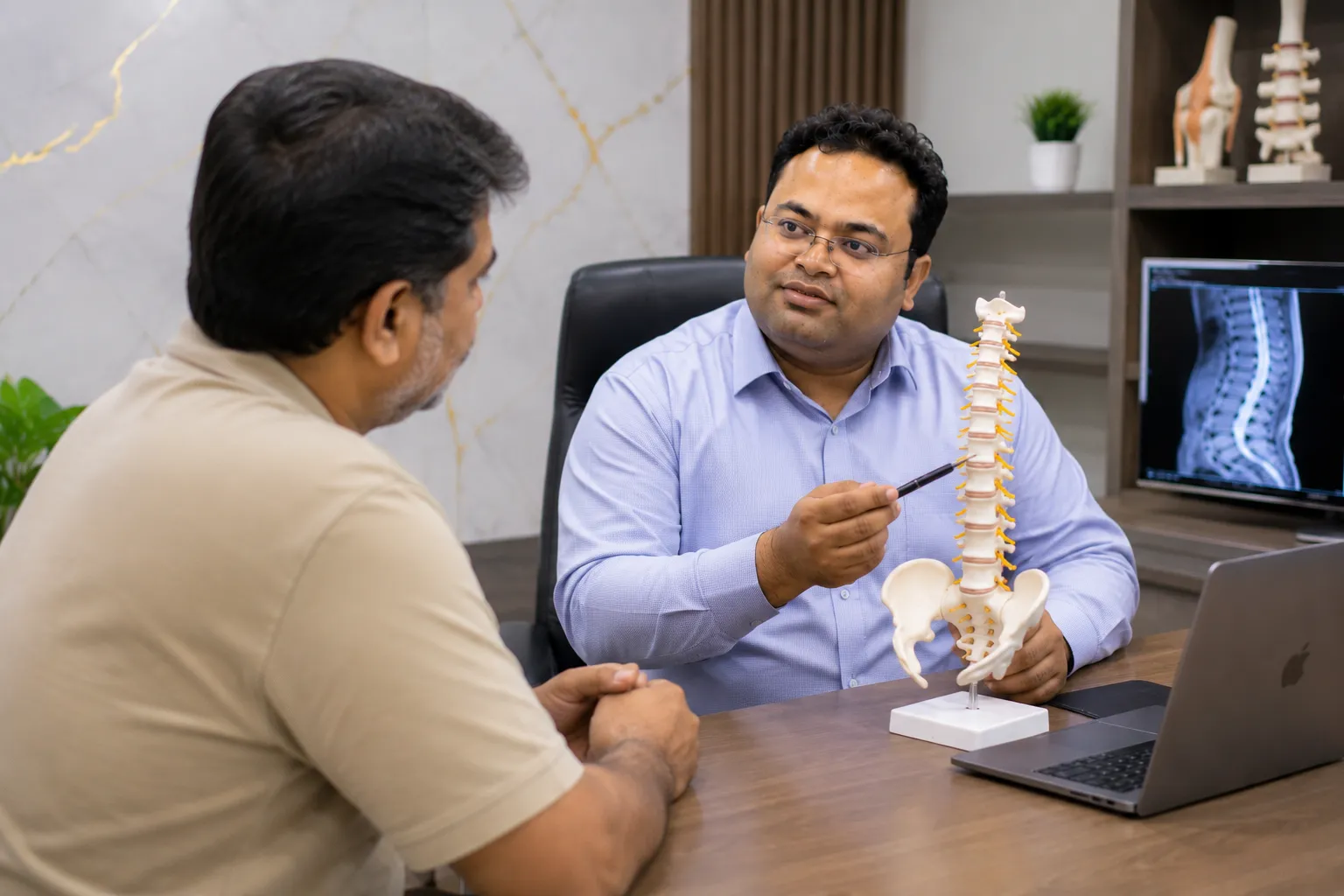
Fact: This is a common misunderstanding. A pain management specialist, also called an interventional pain physician, is trained specifically to locate the exact source of pain using imaging and diagnostic techniques, then treat it directly through minimally invasive procedures. This is fundamentally different from simply prescribing medication.
Myth 6: "If an X-ray Looks Normal, There's Nothing Wrong"
Fact: Many causes of back pain, including nerve irritation, facet joint inflammation, and early disc degeneration, do not always show up clearly on a standard X-ray. An MRI or a more detailed clinical evaluation by a specialist is often needed to identify the true source of pain.
So Which Doctor Should You Actually See for Back Pain?
Now that the myths are cleared up, here is a practical breakdown based on your specific situation.
| Your Situation | Recommended Doctor |
|---|---|
| New, mild pain, no other symptoms | General physician |
| Pain with visible fracture or deformity | Orthopedic surgeon |
| Pain with numbness, tingling, or leg weakness | Pain specialist or neurologist |
| Pain lasting more than 4 to 6 weeks | Pain management specialist |
| Recurring pain despite medication | Pain management specialist |
| Pain after a previous treatment that did not work | Pain management specialist |
| Need for movement and strength support after diagnosis | Physiotherapist (alongside specialist care) |
If your situation falls into more than one category, which is common, the safest and most efficient choice is a pain management specialist, since they are equipped to diagnose the exact cause and coordinate the right course of treatment.
What Actually Causes Chronic Back Pain
Understanding the underlying cause helps explain why a targeted specialist often gets better results than general care alone.
- Degenerative disc disease: Discs lose hydration and cushioning ability with age, leading to pain during movement.
- Facet joint syndrome: Small joints connecting the vertebrae become inflamed or irritated, often from repetitive strain.
- Sciatica: Compression of the sciatic nerve causes pain that radiates from the lower back through the leg.
- Spinal stenosis: Narrowing of the spinal canal puts pressure on nerves, often worsening with standing or walking.
- Muscle strain: Overuse or poor posture leads to localized, often short term pain.
Risk Factors That Increase Your Chances of Chronic Back Pain
- Prolonged sitting, especially with poor posture
- Sedentary lifestyle with minimal core strength
- Previous back injury that was not fully rehabilitated
- Being overweight, which adds pressure on the spine
- Repetitive heavy lifting or physically demanding work
- Age related disc and joint degeneration
How a Pain Specialist Diagnoses the Real Source of Back Pain
A proper diagnostic process is what separates effective treatment from trial and error.
- Detailed symptom history: Understanding when pain started, what worsens or relieves it, and previous treatments tried.
- Physical and neurological exam: Testing strength, reflexes, and movement patterns.
- Imaging review: MRI or X-ray to assess discs, joints, and nerve pathways.
- Diagnostic nerve block (if needed): A targeted injection that helps confirm the exact pain source before committing to a treatment plan.
This structured process is the reason many patients who switch from general care to a pain specialist finally experience lasting relief.
Surgery vs Non-Surgical Treatment: What the Evidence Suggests
| Aspect | Surgery | Non-Surgical Interventional Treatment |
|---|---|---|
| Recovery time | Weeks to months | Often days |
| Invasiveness | High | Minimal |
| Risk level | Higher, due to anesthesia and incision | Lower, image-guided precision |
| Suitable for | Severe structural damage, spinal instability | Most chronic pain from discs, nerves, joints |
| First line approach | Rarely, except in emergencies | Yes, in the majority of cases |
For most patients, non-surgical interventional treatment is tried first, and a large proportion find effective, lasting relief without ever needing an operation.
Injection Therapy vs Long Term Medication Use
Long term reliance on oral pain medication can lead to side effects, reduced effectiveness over time, and does not address the actual source of pain. Targeted injection therapy, such as epidural steroid injections or facet joint injections, delivers medication directly to the affected area, often providing more effective and longer lasting relief with fewer systemic side effects.
The Benefits of Seeing the Right Specialist Early
- Faster, more accurate diagnosis
- Reduced risk of pain becoming chronic
- Lower dependency on long term medication
- Better chances of avoiding surgery altogether
- Faster return to normal daily activity and work
Prevention Tips to Reduce Future Back Pain Episodes
- Maintain good posture, especially during desk work
- Strengthen core and back muscles regularly
- Avoid prolonged sitting without breaks
- Use proper lifting technique for heavy objects
- Maintain a healthy body weight
- Address minor back discomfort early rather than ignoring it
Recovery Guidance After Diagnosis
Once a treatment plan is in place, a few habits support faster, more lasting recovery.
- Follow physiotherapy exercises consistently, even after pain improves
- Avoid returning to heavy activity too quickly
- Maintain ergonomic posture at work and home
- Attend follow up consultations to monitor progress
- Communicate openly with your specialist about pain changes
When Should You Stop Waiting and See a Pain Specialist?
- Pain has lasted longer than four to six weeks
- Pain returns repeatedly despite rest and medication
- You experience numbness, tingling, or leg weakness
- Pain affects your sleep, work, or daily mobility
- Previous treatments have not provided lasting relief
If even one of these applies, a pain management specialist is the most direct path to an accurate diagnosis and effective treatment.
Why Choose Vedant Pain Management Clinic
Patients across Faridabad and Delhi NCR trust Vedant Pain Management Clinic for a structured, specialist-led approach to back pain that goes beyond generic treatment.
Experienced pain specialist care
Treatment is led by physicians trained specifically in interventional pain medicine, ensuring an accurate, source-focused diagnosis rather than guesswork.
Minimally invasive treatment options
From epidural injections to radiofrequency ablation, procedures are designed to relieve pain directly at the source while minimizing downtime.
Personalized treatment plans
Every back pain case is different. Treatment plans at Vedant are built around each patient's diagnosis, history, and lifestyle.
Advanced, image-guided procedures
All interventional treatments are performed with imaging guidance to ensure precision and safety.
Surgery considered only when truly necessary
The clinical philosophy prioritizes resolving pain through targeted, non-surgical intervention first, reserving surgical referral for cases where it is genuinely required.
Conclusion: Choose the Right Doctor, Not the Most Convenient One
Back pain is too often treated as a one-size-fits-all problem, when in reality the right doctor depends entirely on your specific symptoms, history, and how long the pain has lasted. Believing the wrong myths, whether it is assuming surgery is inevitable or that painkillers alone will solve everything, can delay the relief you actually need.
If your back pain has lasted weeks, kept coming back, or simply has not responded to general treatment, a pain management specialist offers the most direct, evidence-based path forward. Book a consultation with Vedant Pain Management Clinic in Faridabad and get a diagnosis that actually explains your pain, not just a prescription that masks it.