Why Does My Hip Hurt When I Walk
Her story is common. Hip pain while walking rarely announces itself loudly. It builds gradually, gets dismissed as normal wear and tear, and only gets serious attention once it starts affecting sleep, mobility, or independence.
This guide walks through exactly why hip pain happens during walking, what it could mean, and how it is diagnosed and treated, especially for patients in Faridabad and Delhi NCR looking for answers beyond a generic painkiller prescription.
The Hip Joint: A Quick Look at Why It's So Pain-Prone
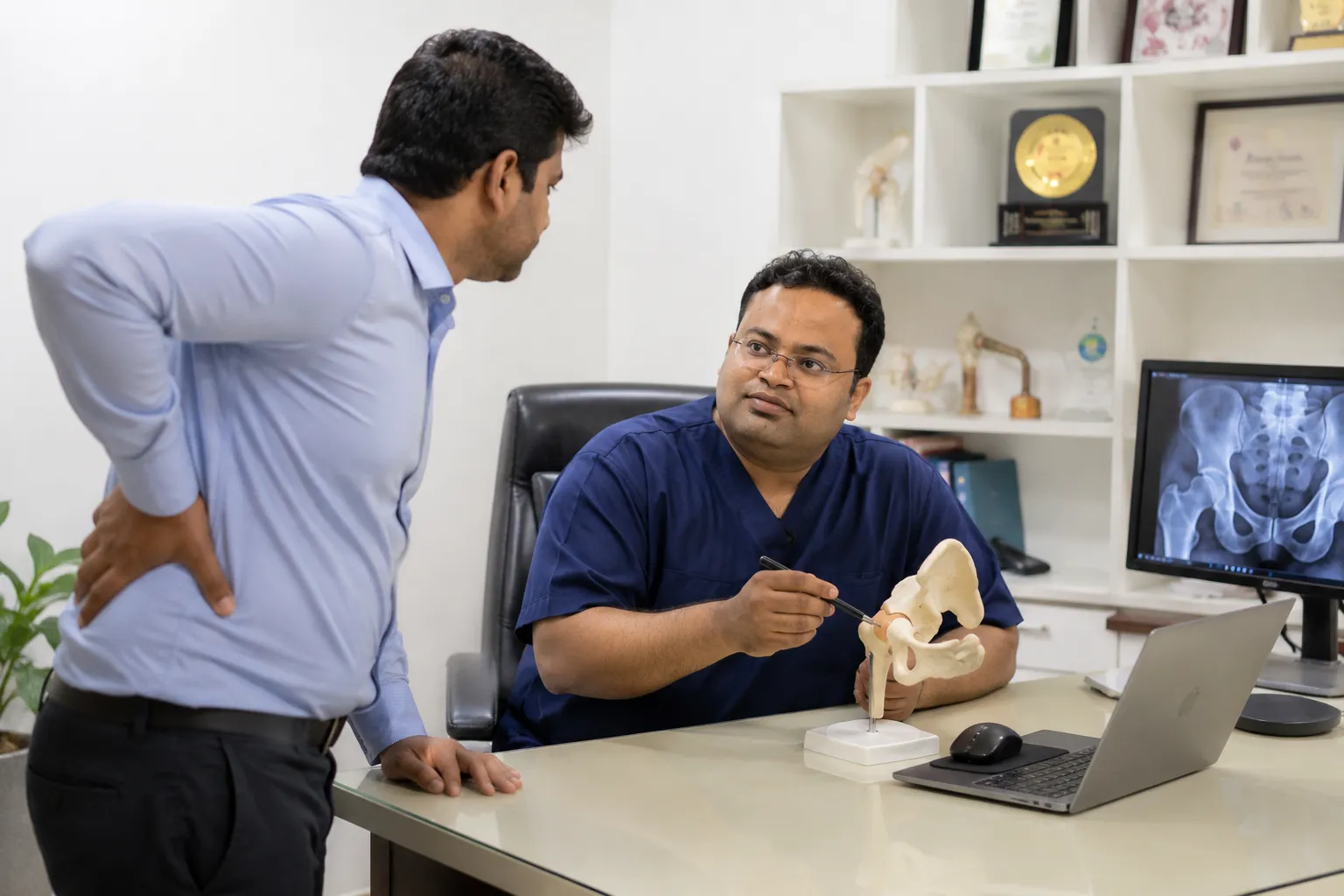
The hip is a ball and socket joint, one of the most load-bearing joints in the body. Every single step transmits force through cartilage, ligaments, tendons, and the surrounding muscles. When any one of these structures is irritated, inflamed, or worn down, walking becomes the activity that exposes the problem most clearly, since it is the movement that loads the joint repeatedly and from multiple angles.
This is exactly why hip pain often feels fine at rest but flares up the moment you start moving.
Common Causes Behind Hip Pain While Walking
1. Osteoarthritis of the Hip
This is one of the leading causes of hip pain in adults over 45. Cartilage cushioning the joint wears down over time, causing bone to rub against bone during movement.
Typical signs: Stiffness in the morning, pain that worsens with activity, a grinding or catching sensation while walking.
2. Trochanteric Bursitis
The bursa is a small fluid-filled sac that cushions the hip joint. When it becomes inflamed, usually from repetitive movement or prolonged pressure, pain appears specifically on the outer hip.
Typical signs: Sharp pain when walking, lying on the affected side, or climbing stairs.
3. Hip Labral Tear
The labrum is cartilage that lines the hip socket. A tear here, often from injury or structural wear, can cause pain that feels deep inside the joint.
Typical signs: Clicking or locking sensation, pain during specific movements like twisting or pivoting.
4. Sciatica or Nerve Referral Pain
Sometimes hip pain is not coming from the hip at all. Compressed nerves in the lower spine can refer pain down to the hip and thigh, mimicking a joint problem.
Typical signs: Pain radiating from the lower back through the buttock and hip, sometimes with tingling or numbness in the leg.
5. Muscle Strain or Tendinitis
Overuse of the hip flexors or glute muscles, common in people who walk long distances or exercise without proper form, can lead to localized pain that worsens with movement.
Typical signs: Pain that improves with rest, tenderness when pressing on specific muscle areas.
6. Avascular Necrosis
A less common but serious cause where blood supply to the hip bone is disrupted, leading to bone tissue breakdown. This requires prompt medical evaluation.
Typical signs: Progressively worsening pain, even at rest in advanced stages.
Risk Factors That Make Hip Pain More Likely
Certain factors increase the chances of developing walking-related hip pain:
- Age above 45, due to natural cartilage wear
- Being overweight, which adds extra load on hip joints
- A sedentary lifestyle with sudden bursts of activity
- Previous hip or lower back injury
- Repetitive strain from certain occupations or sports
- Poor posture or abnormal walking gait
- Family history of arthritis or joint conditions
How Pain Specialists Diagnose the Source of Hip Pain
Unlike a quick physical exam, a thorough hip pain evaluation by a pain management specialist typically follows a structured path.
| Step | What Happens | Why It Matters |
|---|---|---|
| Patient history | Discussing when pain started, what triggers it, and past injuries | Narrows down likely causes |
| Physical examination | Testing range of motion, strength, and gait pattern | Identifies functional limitations |
| Imaging (X-ray/MRI) | Visualizing joint structure, cartilage, and soft tissue | Confirms structural diagnosis |
| Nerve assessment | Checking for referred pain from the spine | Rules out sciatica or nerve compression |
| Diagnostic injection (if needed) | Targeted injection to confirm pain source | Pinpoints exact origin of pain |
This step-by-step approach is critical because hip pain that looks similar on the surface can have very different underlying causes, and treating the wrong one delays real relief.
Treatment Options: From Conservative Care to Interventional Procedures
Conservative Care (First Line of Treatment)
For mild to moderate hip pain, the initial approach usually includes:
- Activity modification to reduce joint strain
- Physiotherapy to strengthen supporting muscles
- Anti-inflammatory medication for short-term relief
- Weight management to reduce joint load
- Use of supportive footwear or walking aids if needed
Interventional Pain Management (For Persistent or Chronic Pain)
When conservative care does not provide lasting relief, interventional pain procedures offer targeted, non-surgical solutions.
- Image-guided hip joint injections: Deliver anti-inflammatory medication directly into the joint for precise relief.
- Hip Cooled Radiofrequency Ablation: Disrupts pain signals from sensory nerves around the hip joint, providing longer lasting relief than standard injections.
- Trigger point release: Targets muscle-related pain contributing to hip discomfort.
- Nerve blocks: Used both diagnostically and therapeutically to manage nerve-related hip pain.
Surgical Intervention (Reserved for Severe Cases)
Surgery, including joint replacement, is typically considered only when structural damage is severe and non-surgical options have not provided adequate relief.
Conservative Care vs Interventional Pain Procedures
| Factor | Conservative Care | Interventional Procedures |
|---|---|---|
| Invasiveness | Non-invasive | Minimally invasive |
| Speed of relief | Gradual, over weeks | Often faster, targeted |
| Best suited for | Mild, early stage pain | Moderate to chronic pain |
| Precision | General approach | Image-guided, targeted to source |
| Long term outcome | Variable | Often more durable for chronic cases |
Most patients benefit from starting conservative, then moving to interventional care if pain persists beyond a reasonable trial period, generally four to six weeks.
Why Early Intervention Makes a Real Difference
Hip pain that is ignored for too long often leads to compensatory walking patterns, where the body shifts weight to avoid pain. Over time, this can cause secondary problems in the knees, lower back, and opposite hip.
Addressing hip pain early offers several advantages:
- Prevents the development of an abnormal gait
- Reduces risk of pain spreading to other joints
- Increases chances of full recovery without surgery
- Shortens overall treatment timeline
- Preserves muscle strength and joint mobility
Prevention Tips to Protect Your Hips While Walking
- Maintain a healthy weight to reduce joint stress
- Wear supportive, well-cushioned footwear
- Warm up before long walks or exercise
- Strengthen hip and core muscles regularly
- Avoid sudden increases in walking distance or intensity
- Address lower back issues early, since they can affect hip mechanics
- Take short breaks during prolonged standing or walking
Recovery Guidance for Patients Already Experiencing Hip Pain
If hip pain is already present, a few practical steps can support recovery alongside professional treatment.
- Avoid prolonged sitting or standing in one position
- Use a cushion or pillow for support while sleeping on your side
- Follow prescribed physiotherapy exercises consistently
- Apply ice or heat as advised by your specialist
- Gradually return to walking distances rather than resuming full activity at once
When Should You See a Pain Specialist for Hip Pain?
While occasional mild hip discomfort may resolve on its own, certain signs indicate it is time to consult a pain management specialist rather than waiting it out.
- Pain lasting longer than four to six weeks
- Pain that worsens with walking or climbing stairs
- Difficulty sleeping due to hip discomfort
- A noticeable limp or change in walking pattern
- Pain that does not improve with rest or basic medication
- Hip pain accompanied by lower back pain or leg numbness
If any of these apply, a structured evaluation is far more effective than continuing to self-manage the pain.
Why Choose Vedant Pain Management Clinic
For patients in Faridabad and across Delhi NCR, Vedant Pain Management Clinic offers a specialized, evidence-based approach to hip pain that goes beyond generic pain relief.
Experienced pain specialist care
Treatment is led by physicians trained specifically in interventional pain medicine, ensuring an accurate, source-focused diagnosis rather than a one-size-fits-all prescription.
Minimally invasive treatment options
From image-guided injections to Hip Cooled Radiofrequency Ablation, treatments are designed to relieve pain directly at its source while minimizing recovery time.
Personalized treatment plans
Every patient's hip pain has a unique cause and history. Treatment plans at Vedant are built around individual diagnosis, lifestyle, and activity levels.
Advanced, precision-guided procedures
All interventional procedures are performed using imaging guidance to ensure accuracy and patient safety.
Surgery considered only when necessary
The clinical approach prioritizes resolving hip pain through targeted, non-surgical intervention first, reserving surgical referral for cases where it is genuinely required.
Conclusion: Don't Let Hip Pain Dictate How You Walk
Hip pain while walking is rarely something to simply push through. Left unaddressed, it can quietly affect your gait, your sleep, and eventually your independence, much like it did for Sapna before she sought proper care.
Understanding the underlying cause, whether it is arthritis, bursitis, a labral tear, or referred nerve pain, is the first step toward effective, lasting treatment. With the right diagnosis and a personalized, minimally invasive treatment plan, most patients regain pain-free movement without needing surgery.
If hip pain has been slowing you down, do not wait for it to get worse. Book a consultation with Vedant Pain Management Clinic in Faridabad and take the first step toward walking comfortably again.