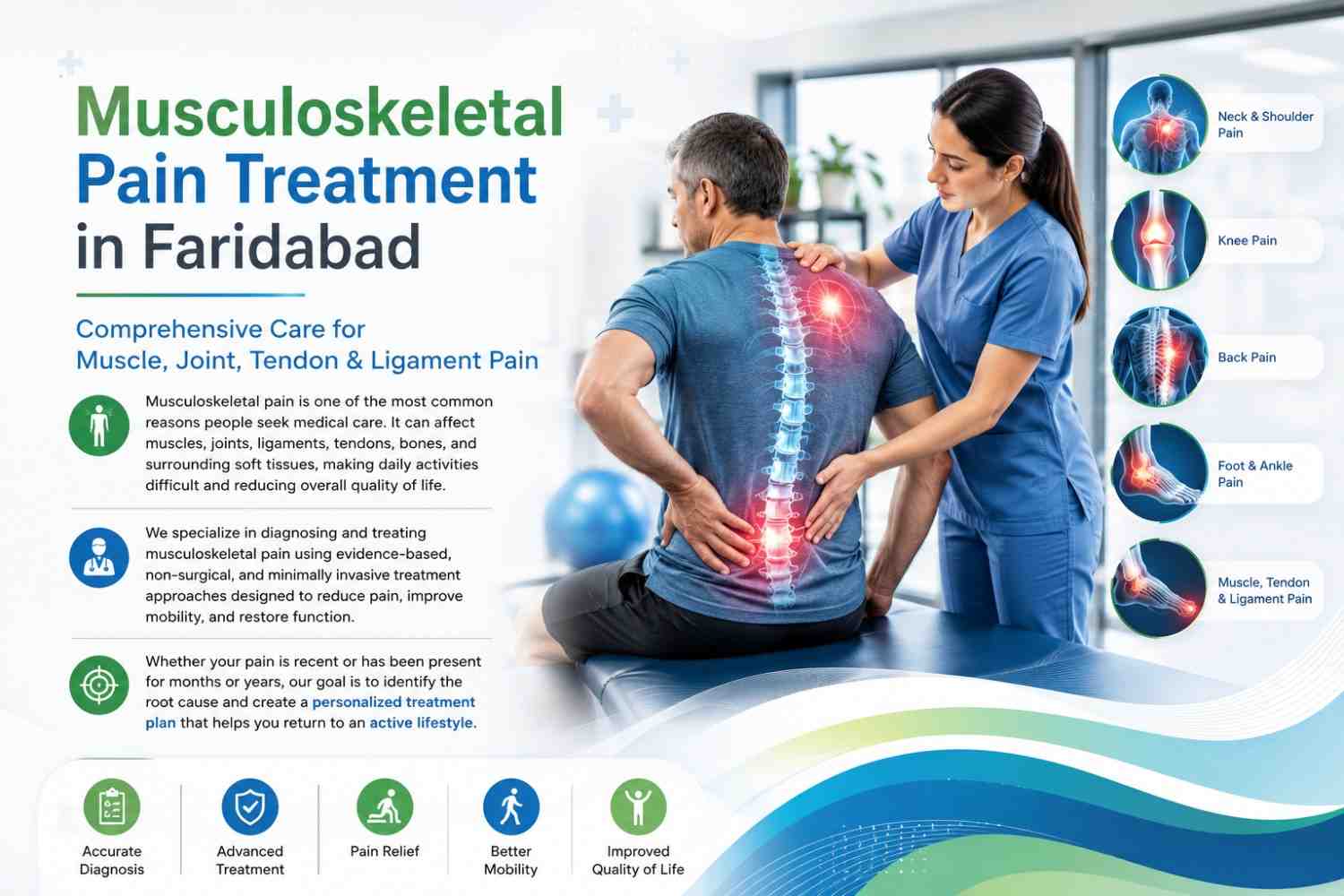
Musculoskeletal Pain Treatment

Musculoskeletal Pain Treatment at Vedant Pain Clinic

Musculoskeletal Pain Treatment in Faridabad

Comprehensive Care for Muscle, Joint, Tendon & Ligament Pain

Musculoskeletal pain is one of the most common reasons people seek medical care. It can affect muscles, joints, ligaments, tendons, bones, and surrounding soft tissues, making daily activities difficult and reducing overall quality of life.

At Vedant Pain Management Clinic, we specialize in diagnosing and treating musculoskeletal pain using evidence-based, non-surgical, and minimally invasive treatment approaches designed to reduce pain, improve mobility, and restore function.

Whether your pain is recent or has been present for months or years, our goal is to identify the root cause and create a personalized treatment plan that helps you return to an active lifestyle.

Comprehensive Diagnosis

Detailed evaluation of muscles, joints, tendons, ligaments, and soft tissues to identify the root cause of pain.

Non-Surgical Treatment

Evidence-based, minimally invasive treatment approaches designed to reduce pain and restore function.

Personalized Treatment Plans

Individualized care plans that help you improve mobility and return to an active lifestyle.

What is Musculoskeletal Pain?

Musculoskeletal pain refers to pain originating from:

  • Muscles
  • Joints
  • Tendons
  • Ligaments
  • Fascia
  • Bones
  • Soft tissues

The pain may be acute (short-term) or chronic (lasting more than three months).

Common Symptoms

Patients may experience:

  • Muscle pain
  • Joint pain
  • Stiffness
  • Swelling
  • Reduced flexibility
  • Weakness
  • Tenderness
  • Pain during movement
  • Difficulty walking
  • Limited range of motion

Common Types of Musculoskeletal Pain

Neck Pain

Neck pain may result from:

  • Poor posture
  • Cervical spondylosis
  • Muscle strain
  • Disc problems
  • Nerve irritation
Back Pain

Common causes include:

  • Muscle strain
  • Facet joint pain
  • Slip disc
  • Degenerative spine conditions
  • Postural issues
Shoulder Pain

Shoulder pain may occur due to:

  • Rotator cuff injuries
  • Frozen shoulder
  • Tendinitis
  • Bursitis
  • Overuse injuries
Knee Pain

Common causes include:

  • Osteoarthritis
  • Ligament injuries
  • Meniscus injuries
  • Patellofemoral pain syndrome
Hip Pain

Hip pain may be related to:

  • Arthritis
  • Tendon injuries
  • Bursitis
  • Muscle imbalance
Myofascial Pain Syndrome

A chronic pain condition involving:

  • Muscle tightness
  • Trigger points
  • Localized tenderness
  • Referred pain patterns

Conditions We Commonly Treat

  • Chronic Neck Pain
  • Chronic Back Pain
  • Sciatica
  • Shoulder Pain
  • Frozen Shoulder
  • Rotator Cuff Disorders
  • Tennis Elbow
  • Golfer's Elbow
  • Wrist Pain
  • Hand Pain
  • Hip Pain
  • Knee Pain
  • Osteoarthritis
  • Muscle Strains
  • Tendinitis
  • Bursitis
  • Myofascial Pain Syndrome
  • Sports Injuries
  • Postural Pain Syndromes

Causes of Musculoskeletal Pain

Several factors may contribute, including:

  • Poor posture
  • Repetitive movements
  • Sports injuries
  • Sedentary lifestyle
  • Age-related degeneration
  • Obesity
  • Occupational strain
  • Previous injuries
  • Arthritis
  • Overuse of joints and muscles

How is Musculoskeletal Pain Diagnosed?

A comprehensive evaluation may include:

  • Detailed medical history
  • Physical examination
  • Movement assessment
  • Posture evaluation
  • X-rays
  • MRI scans
  • Ultrasound imaging
  • Diagnostic procedures when required

Musculoskeletal Pain Treatment Options

Personalized Pain Management

Every patient receives an individualized treatment plan based on the underlying cause of pain.

Rehabilitation & Exercise Therapy

Structured rehabilitation programs may help:

  • Improve flexibility
  • Strengthen muscles
  • Restore mobility
  • Prevent recurrence
Lifestyle & Posture Correction

Patients receive guidance on:

  • Ergonomics
  • Workplace posture
  • Activity modification
  • Home exercise routines
Interventional Pain Management

For selected patients, advanced procedures may be considered, including:

  • Image-guided injections
  • Joint injections
  • Trigger point injections
  • Nerve blocks
  • Radiofrequency Ablation (RFA)
Medication Management

Appropriate medications may be used as part of a comprehensive treatment strategy.

Prevention Tips

Maintain Good Posture

Proper posture reduces stress on muscles and joints.

Stay Physically Active

Regular movement helps maintain flexibility and strength.

Exercise Regularly

Strengthening and stretching exercises help support musculoskeletal health.

Maintain a Healthy Weight

Reducing excess body weight decreases stress on joints.

Avoid Prolonged Sitting

Take frequent breaks and move regularly throughout the day.

When Should You See a Pain Specialist?

Consult a specialist if you experience:

  • Persistent pain lasting more than a few weeks
  • Difficulty walking or moving
  • Pain interfering with work or sleep
  • Recurrent injuries
  • Joint stiffness and swelling
  • Reduced mobility

Why Choose Vedant Pain Management Clinic?

  • Comprehensive pain evaluation
  • Non-surgical treatment options
  • Personalized rehabilitation plans
  • Advanced interventional pain procedures
  • Focus on long-term recovery
  • Patient-centered care

Our goal is to help patients reduce pain, improve movement, and regain an active, healthy lifestyle.

FAQ

Common Questions Answered

Have questions about musculoskeletal pain treatment at Vedant Pain Clinic? Find answers to the most frequently asked questions below.

Book a Consultation
What is musculoskeletal pain?

Musculoskeletal pain refers to pain affecting muscles, joints, ligaments, tendons, bones, or surrounding soft tissues.

What are the most common causes of musculoskeletal pain?

Common causes include poor posture, injuries, arthritis, repetitive strain, sports injuries, and age-related wear and tear.

Can musculoskeletal pain be treated without surgery?

Yes. Many musculoskeletal conditions respond well to rehabilitation, exercise therapy, medications, lifestyle modifications, and minimally invasive pain management procedures.

What is myofascial pain syndrome?

Myofascial pain syndrome is a chronic condition involving painful trigger points within muscles that can cause localized or referred pain.

When should I see a doctor for muscle or joint pain?

If pain persists for several weeks, affects daily activities, causes weakness, or limits mobility, medical evaluation is recommended.

Can posture cause musculoskeletal pain?

Yes. Poor posture can contribute to neck pain, back pain, shoulder pain, and muscle strain over time.

What treatments are available for chronic musculoskeletal pain?

Treatment may include rehabilitation, exercise therapy, posture correction, medications, injections, nerve blocks, and interventional pain procedures.

Can obesity worsen joint pain?

Yes. Excess body weight increases stress on weight-bearing joints such as the knees, hips, and spine.

Is exercise safe for musculoskeletal pain?

In most cases, guided exercise and rehabilitation programs can improve strength, flexibility, and function.

How can I prevent musculoskeletal pain?

Maintaining good posture, staying active, exercising regularly, maintaining a healthy weight, and avoiding repetitive strain can help reduce the risk of musculoskeletal pain.

Get Expert Medical Care at
Your Fingertips!

Access top doctors and healthcare services anytime, anywhere. Book appointments,
consult online, and prioritize your well-being today!