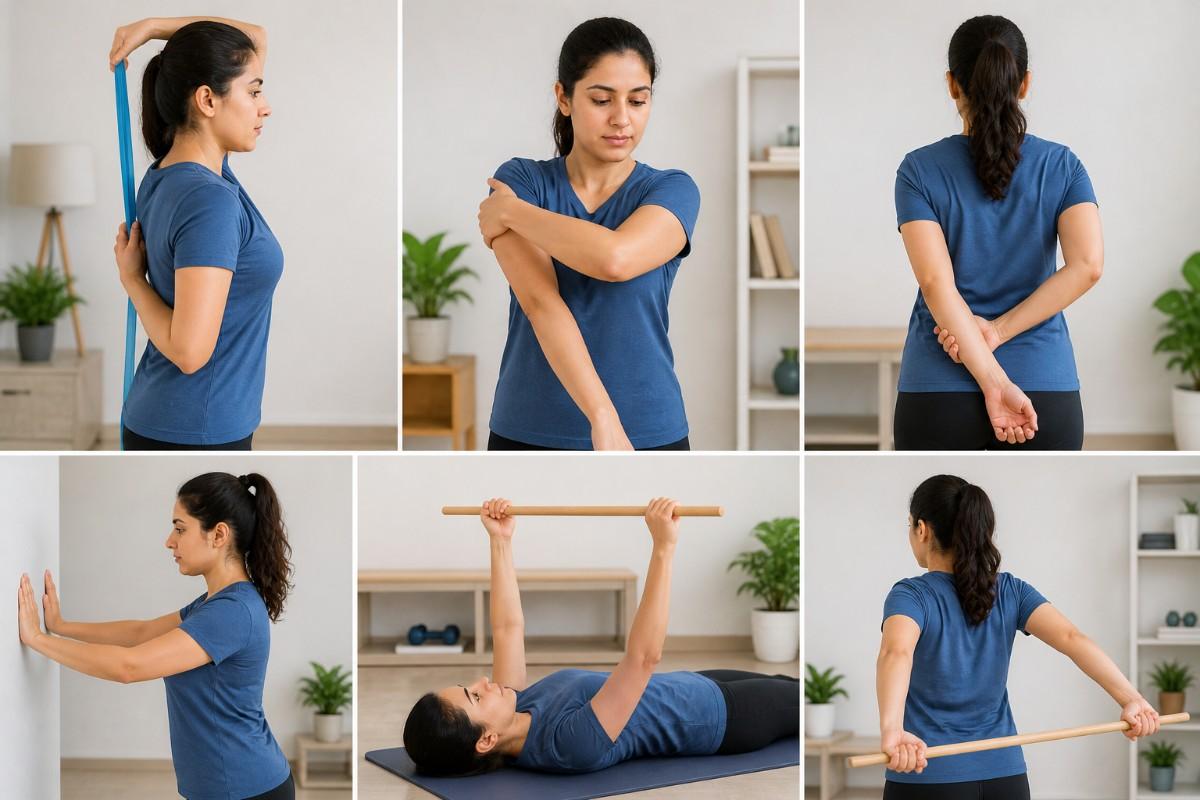
When your shoulder feels locked, even simple movements like reaching overhead or getting dressed can become frustrating. If you are dealing with stiffness and pain, the right shoulder exercises for frozen shoulder can slowly bring your movement back.
In my experience, the biggest mistake people make is avoiding movement completely. It feels safer, but it actually worsens stiffness. Gentle, consistent exercises are what help you recover.
What is Frozen Shoulder?
Frozen shoulder, also known as adhesive capsulitis, is a condition where the shoulder joint becomes stiff and painful over time.
It usually develops in stages:
- Freezing stage with increasing pain
- Frozen stage with limited movement
- Thawing stage where mobility gradually returns
I have noticed that people often wait too long before starting exercises, which delays recovery.
Why Exercises Matter in Frozen Shoulder
Movement keeps your joint flexible.
Without it:
- Stiffness increases
- Range of motion decreases
- Recovery takes longer
A study in the Journal of Orthopaedic Research found that guided exercises significantly improve mobility and reduce recovery time in frozen shoulder patients.
Best Shoulder Exercises for Frozen Shoulder
Start slowly. Stay consistent. Do not push through sharp pain.
1. Pendulum Exercise
This is often the first and safest exercise.
How to do it:
- Lean forward slightly
- Let your affected arm hang freely
- Gently swing it in small circles
Why it works:
It helps loosen the joint without strain.
2. Wall Climbing Exercise
A simple but effective way to regain movement.
Steps:
- Stand facing a wall
- Use your fingers to “walk” your hand upward
- Go as high as comfortable
In my experience, doing this daily gradually improves reach and flexibility.
3. Towel Stretch
Great for improving internal rotation.
Steps:
- Hold a towel behind your back with both hands
- Gently pull upward with the healthy arm
- Hold for a few seconds
4. Cross-Body Stretch
Helps stretch the back of the shoulder.
Steps:
- Bring your affected arm across your chest
- Use the other hand to gently push it closer
5. Finger Walk (Side)
Steps:
- Stand sideways next to a wall
- Walk your fingers up the wall slowly
- Lower gently
This improves side movement, which is often restricted.
Simple Routine You Can Follow
Consistency matters more than intensity.
Daily routine:
- Pendulum exercise for 2 minutes
- Wall climbing for 10 repetitions
- Towel stretch for 10 to 15 seconds hold
- Cross-body stretch for 10 repetitions
Do this once or twice daily for best results.
Tips for Better Results
- Warm up before exercising
- Use heat therapy to reduce stiffness
- Move within a pain-free range
- Be patient with progress
When I tried combining heat therapy with exercises, the improvement in flexibility was much faster.
When to Seek Professional Help
Exercises help, but sometimes guided care is needed.
Consult a specialist if:
- Pain is severe
- Movement is extremely limited
- Progress is very slow
At Vedant Pain Management Clinic, exercise programs are customized based on your condition. This ensures safe and effective recovery.
Advanced Support for Frozen Shoulder
Sometimes additional treatment is needed alongside exercises.
These may include:
- Physiotherapy sessions
- Manual therapy
- Targeted pain management techniques
At Vedant Pain Management Clinic, the focus is on restoring movement without surgery whenever possible.
Real-Life Insight
I once worked with someone who avoided moving their shoulder due to pain. Over time, their stiffness worsened significantly.
Once they started gentle exercises and followed a structured routine, their mobility improved steadily over weeks.
This is something I have seen often. The right shoulder exercises for frozen shoulder can make a huge difference.
Common Mistakes to Avoid
- Skipping exercises due to mild pain
- Doing exercises too aggressively
- Inconsistent routine
- Ignoring posture
Avoiding these mistakes speeds up recovery.
Final Thoughts
Frozen shoulder can feel limiting, but it is not permanent. With the right approach, movement returns.
In my experience, people who stay consistent with gentle exercises and expert guidance recover much faster.
If your progress feels slow or your pain is limiting daily activities, getting support from Vedant Pain Management Clinic can help you regain mobility safely and effectively.