Targeted Relief for Neck Pain & Cervical Nerve Pain
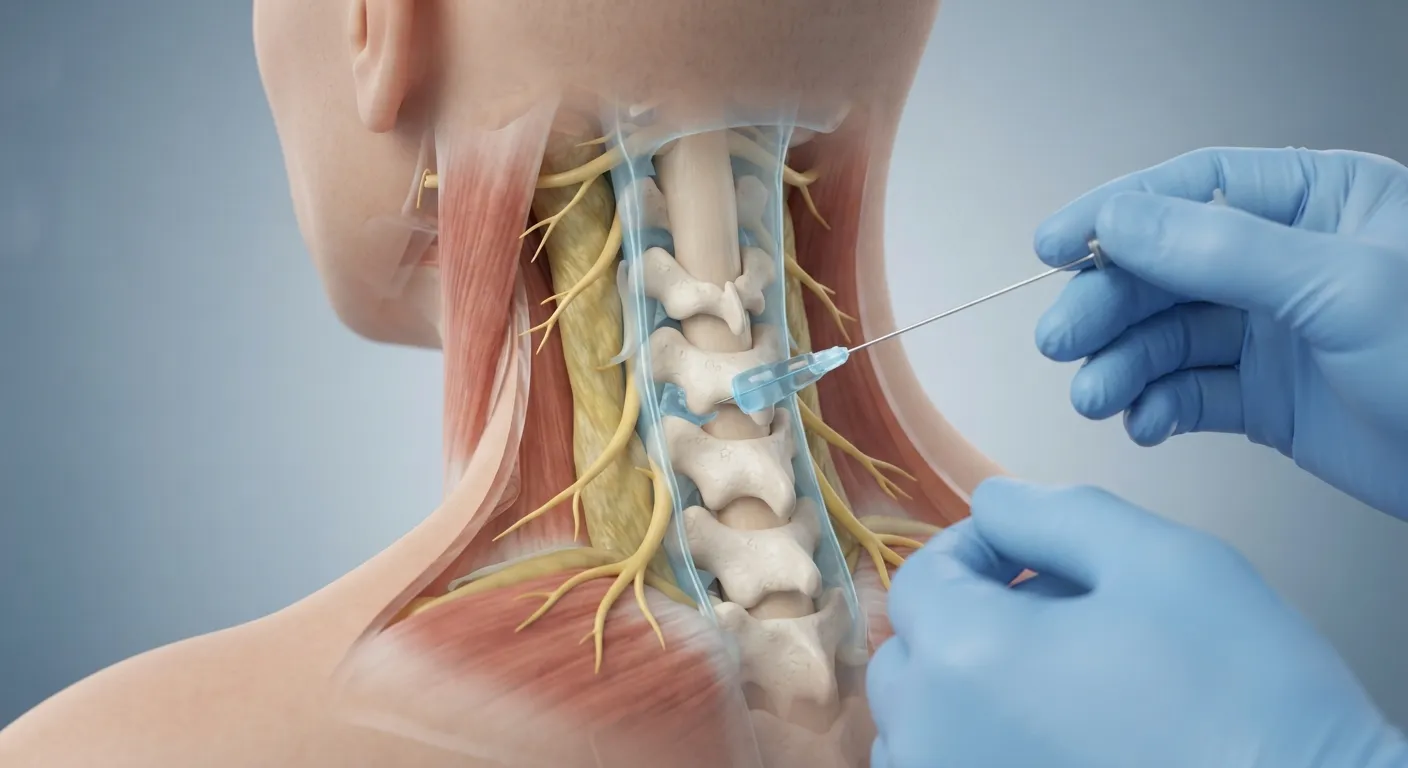
A cervical epidural injection is a minimally invasive, image-guided procedure used to deliver medication into the epidural space around the cervical spine. It may help reduce inflammation and pain associated with cervical nerve irritation, including pain that travels from the neck into the shoulder, arm or hand.

A cervical epidural injection is an image-guided pain management procedure that delivers medication into the epidural space of the cervical spine. The epidural space surrounds the spinal cord and nerve roots and can become inflamed when a cervical disc or other spinal condition irritates a nerve.
Cervical epidural injections are primarily considered for neck pain associated with cervical radicular pain, where pain, tingling or numbness may travel from the neck into the shoulder, arm or hand. The procedure may be considered when symptoms have not improved adequately with appropriate conservative treatment.
Depending on the patient's symptoms and imaging findings, the injection may be performed using an interlaminar or transforaminal approach. The approach is selected by the pain specialist according to the suspected pain generator, anatomy and individual risk factors.
During the procedure, fluoroscopy is used to identify the cervical anatomy and guide the needle into the intended epidural region. Contrast is typically used to confirm appropriate needle position and medication spread before the prescribed medication is administered.
A cervical epidural injection does not remove a disc bulge, reverse spinal degeneration or permanently correct the underlying structural problem. Its purpose is to reduce inflammation and pain so that appropriate rehabilitation and daily activity may become easier.
Your symptoms, neurological examination, medical history and relevant imaging are reviewed to determine whether a cervical epidural injection is appropriate.
You are positioned appropriately, the injection site is cleaned and sterile precautions are followed. Local anaesthesia is used to help minimize discomfort.
Fluoroscopy is used to visualize the cervical spine and guide the needle toward the intended epidural space. Contrast is used to help confirm appropriate placement.
Once needle placement is confirmed, the prescribed medication is carefully injected into the epidural region to help reduce inflammation and pain.
May help reduce pain that travels from the neck into the shoulder, arm or hand when inflammation around a cervical nerve root contributes to symptoms.
Medication delivered into the epidural region may help reduce inflammation associated with irritated cervical nerve roots.
The procedure is designed to deliver medication close to the suspected source of nerve-related pain.
Fluoroscopy and contrast help the physician identify anatomy and confirm appropriate needle placement before medication is delivered.
The procedure is performed through a small needle and does not require open spinal surgery.
When pain decreases, some patients may find it easier to participate in physiotherapy and appropriate activity as part of their recovery.
A cervical epidural injection may be considered when symptoms suggest inflammation or irritation of a cervical nerve root and conservative treatment has not provided sufficient improvement.
Your doctor may consider the procedure if:
Cervical epidural injections are mainly considered for selected patients with cervical nerve-related pain. A detailed assessment helps determine whether inflammation around a cervical nerve root is contributing to the symptoms.
Nerve irritation in the neck can cause pain, tingling, numbness or other symptoms that travel into the shoulder, arm or hand.
A herniated or protruding cervical disc can irritate nearby nerve structures and contribute to radiating neck and arm pain.
In selected patients, a cervical disc bulge may contribute to nerve irritation and radiating pain.
Narrowing of the opening through which a cervical nerve exits can contribute to nerve compression and radicular symptoms.
Degenerative changes in the cervical spine may contribute to nerve-related pain in appropriately selected patients.
Persistent cervical radicular symptoms that interfere with sleep, movement or daily activities may be evaluated for targeted epidural treatment.
Your symptoms, neurological findings, medical history and relevant imaging are reviewed before deciding whether an epidural injection is appropriate.
Image guidance supports accurate identification of the cervical anatomy and controlled needle placement.
Treatment is considered only after evaluating whether the symptoms and clinical findings support a suitable cervical pain generator.
The injection is integrated into an individualized treatment plan that may include medication, exercise, physiotherapy and other appropriate pain-management strategies.
A thorough assessment is performed before treatment to determine whether the symptoms are likely to respond to a cervical epidural injection.
Your specialist will decide whether an epidural injection is suitable and which approach is most appropriate for your individual anatomy and symptoms.
After the injection, you are observed for a short period before discharge according to the clinic's protocol. Temporary soreness or numbness may occur, depending on the medication and injection approach.
You may be advised to:
Pain relief may occur at different times depending on the medication used and the underlying condition. Improvement is not guaranteed, and the response helps your specialist determine the next stage of treatment.
Cervical epidural injections are generally performed as minimally invasive procedures, but the cervical region contains important nerves, blood vessels and the spinal cord, so careful technique and appropriate patient selection are essential.
Temporary pain at the injection site, headache, dizziness, flushing or other medication-related effects may occur.
Bleeding, infection, dural puncture or nerve injury are uncommon but recognized complications.
Rare but serious neurological or vascular complications have been reported with cervical epidural steroid injections. The specific risks can vary depending on the injection approach and medication used.
Your doctor will review your individual risk factors, medications and imaging before deciding whether the procedure is appropriate.
Seek urgent medical attention after the procedure if you develop new or worsening weakness, significant numbness, difficulty walking, severe headache, fever or other concerning neurological symptoms.
If neck pain, arm pain, tingling or numbness is
affecting your daily activities, a detailed assessment
can help determine whether a cervical epidural
injection is appropriate for your condition.
Book an Appointment with Vedant Pain Management Clinic