Home/ Treatments/ Radiofrequency Ablation/
Radiofrequency Ablation

Hip Cooled Radiofrequency Ablation

Targeted Pain Relief for Chronic Hip Pain

Hip cooled radiofrequency ablation is a minimally invasive pain management procedure that uses cooled radiofrequency energy to target selected sensory nerve branches supplying the hip. It may be considered for carefully selected patients with persistent hip pain when conservative treatments have not provided adequate relief.
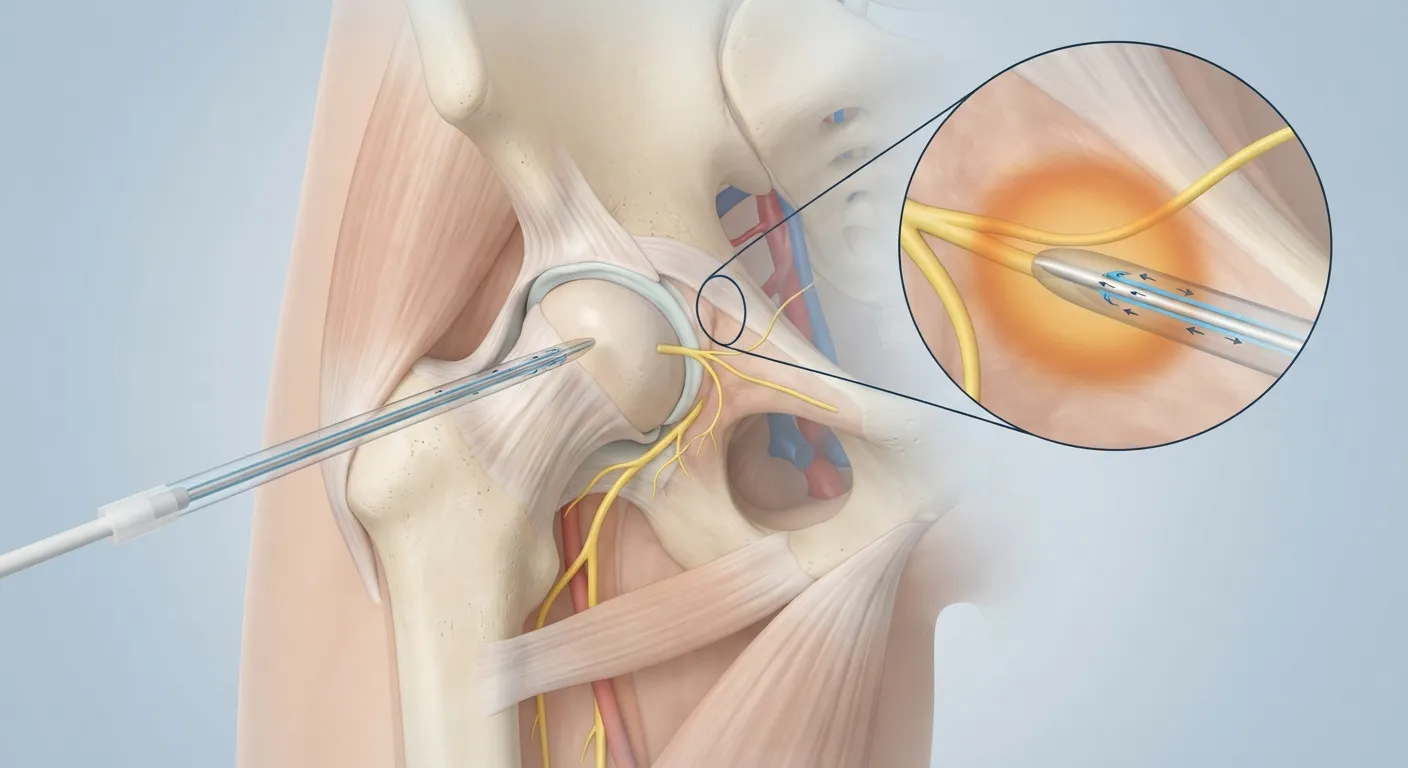
Hip cooled radiofrequency ablation for chronic hip pain
Treatment Type
Cooled RFA
Target Area
Hip Sensory Nerves
Guidance
Image Guided
Treatment Goal
Pain Modulation
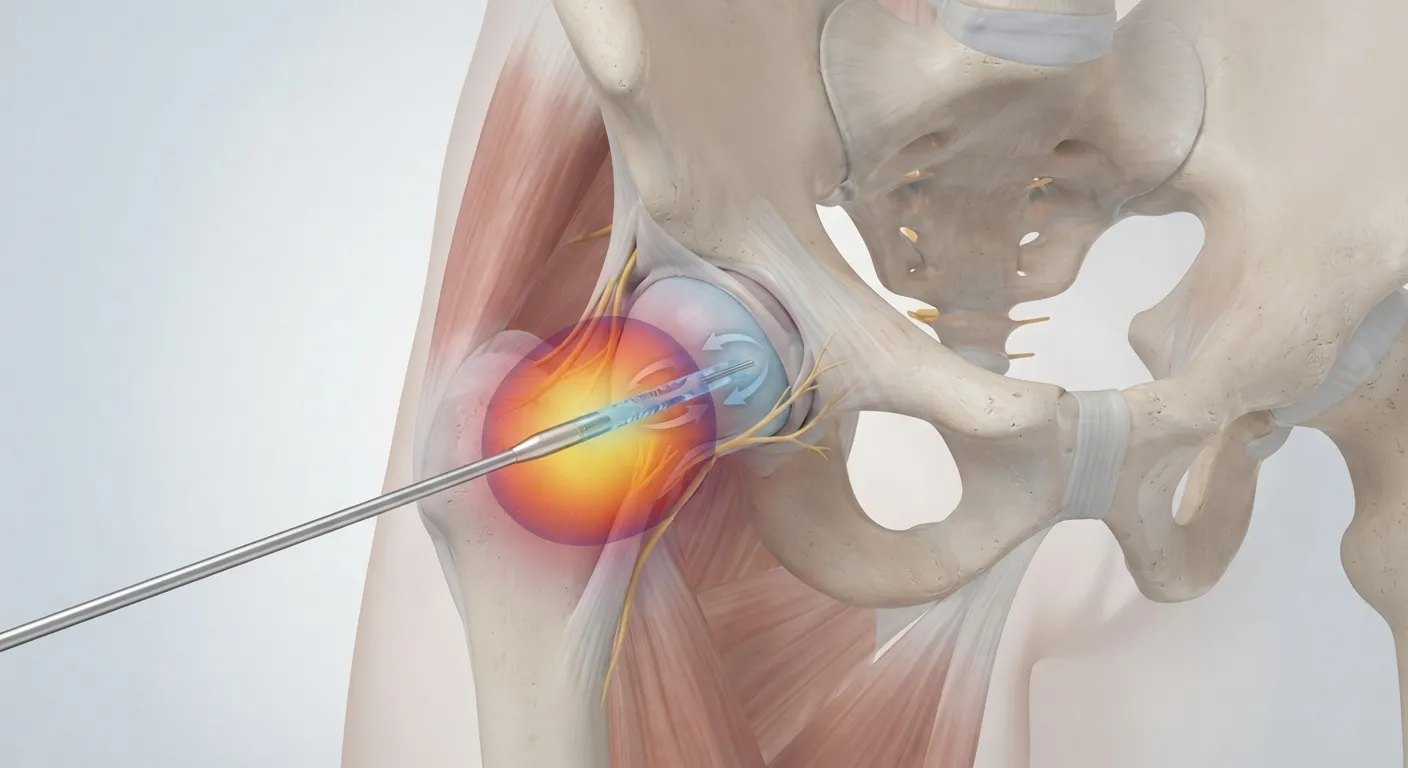
Image-guided cooled radiofrequency ablation targeting sensory nerves around the hip

What Is Hip Cooled Radiofrequency Ablation?

Hip cooled radiofrequency ablation, also called cooled RFA, is a minimally invasive procedure used to reduce chronic hip pain by targeting selected sensory nerve branches that carry pain signals from the hip region.

Unlike a hip replacement, cooled RFA does not repair or replace the damaged joint. It is a pain management procedure designed to reduce the transmission of pain signals from the affected area.

During cooled RFA, a specialized probe delivers controlled radiofrequency energy while circulating cooled fluid around the treatment tip. This creates a larger treatment zone than conventional thermal RFA, which can be useful when targeting the small sensory nerve branches around the hip.

The exact nerves targeted depend on the anatomy and source of pain. The articular branches associated with the femoral and obturator nerves are commonly considered in hip denervation procedures, while the treatment plan is individualized for each patient.

A diagnostic nerve block may be performed before RFA to determine whether interrupting the relevant pain pathway provides meaningful temporary relief. This helps the pain specialist decide whether radiofrequency treatment is appropriate.

Targets selected sensory nerves
Uses cooled radiofrequency energy
Image-guided precision
Focuses on pain pathways
Minimally invasive approach
Requires careful patient selection
01
Clinical Assessment

Your pain history, physical examination and relevant imaging are reviewed to determine the likely source of hip pain and whether nerve-targeted treatment may be appropriate.

02
Diagnostic Nerve Block

When appropriate, a targeted diagnostic block may be performed first. Temporary improvement can help determine whether the selected sensory nerve pathway is contributing to the pain.

03
Image-Guided Nerve Targeting

The patient is positioned appropriately and imaging is used to guide the radiofrequency probe toward the selected sensory nerve targets while avoiding important surrounding structures.

04
Cooled Radiofrequency Treatment

Controlled radiofrequency energy is delivered through a cooled probe to create a treatment zone around the selected sensory nerve pathway and reduce pain signal transmission.

Potential Benefits of Hip Cooled RFA
Potential Pain Reduction

Cooled RFA may reduce chronic hip pain in appropriately selected patients by interrupting targeted sensory pain pathways.

Support for Daily Activity

Reduced pain may make standing, walking and other daily activities more manageable for some patients.

Image-Guided Precision

Imaging helps the physician identify anatomical landmarks and guide the treatment toward the intended sensory nerve targets.

Larger Treatment Zone

The cooling mechanism allows a controlled treatment zone around the active probe tip, which may be useful for treating small articular nerve branches.

Minimally Invasive Approach

The procedure is performed through needles rather than through open hip surgery.

Alternative Pain Management Option

For selected patients, cooled RFA may provide another option when medication, injections or other conservative measures have not provided sufficient relief.

Hip cooled RFA treats pain transmission and does not repair damaged cartilage, reverse arthritis or replace a structurally damaged hip joint.
You May Be a Candidate If:

Hip cooled RFA may be considered for carefully selected patients with persistent hip pain after a thorough evaluation and appropriate conservative treatment.

Your doctor may consider the procedure if:

  • You have persistent or chronic hip pain affecting daily activities.
  • The clinical evaluation suggests that articular sensory nerves are contributing to your pain.
  • Medication, physiotherapy, activity modification or other appropriate treatments have not provided adequate relief.
  • A diagnostic nerve block provides meaningful temporary pain relief.
  • You are not an appropriate candidate for, or wish to defer, more invasive surgical treatment when clinically reasonable.
  • Your overall health and medication history allow the procedure to be performed safely.
Patient selection is important. Hip pain can arise from the joint, surrounding muscles and tendons, the spine, sacroiliac joint or other structures. The underlying source should be identified before considering nerve ablation.

Conditions Where Hip Cooled RFA May Be Considered

Hip cooled RFA is considered only after identifying a suitable pain generator. It may be discussed when persistent hip pain is believed to involve sensory nerve pathways that can be safely targeted.

Hip Osteoarthritis

Selected patients with painful hip osteoarthritis may be considered for sensory nerve ablation when conservative treatment has not provided adequate relief.

Chronic Hip Pain

Persistent hip pain with an identified articular component may warrant assessment for targeted nerve pain treatment.

Persistent Pain Despite Treatment

Patients who continue to experience significant pain despite appropriate non-surgical treatment may be evaluated for other pain management options.

Patients Seeking a Non-Surgical Option

For carefully selected patients who are not ready for or are not suitable for surgery, nerve-targeted pain treatment may be discussed when clinically appropriate.

Positive Diagnostic Nerve Block

Temporary but meaningful relief following an appropriate diagnostic block can help identify patients who may benefit from further nerve-targeted treatment.

Pain Affecting Mobility

Persistent hip pain that interferes with walking, standing or other daily activities may require a comprehensive pain management assessment.

Why Choose Vedant Pain Management Clinic for Hip Cooled RFA?

Detailed Pain Assessment

Hip pain can have several causes. A detailed assessment helps distinguish joint-related pain from spinal, muscular, tendon or other sources.

Image-Guided Precision

Image guidance supports accurate identification of anatomical landmarks and helps guide the procedure toward the intended nerve targets.

Diagnostic Targeting

Diagnostic nerve blocks can help assess whether a selected pain pathway is contributing to the patient's symptoms before considering RFA.

Personalized Pain Care

Treatment decisions are based on your symptoms, diagnosis, previous treatment, functional goals and overall health.

Before Hip Cooled RFA

A comprehensive assessment is performed to identify the likely source of hip pain and determine whether targeted nerve treatment is appropriate.

  • Review of pain history
  • Physical examination
  • Assessment of hip movement
  • Review of relevant imaging
  • Identification of the likely pain generator
  • Review of previous treatments
  • Diagnostic nerve block when appropriate
  • Discussion of expected outcomes and risks

Cooled RFA is not appropriate for every cause of hip pain. A clear clinical rationale is established before treatment.

Image-guided cooled radiofrequency ablation procedure for chronic hip pain
After Hip Cooled RFA

Recovery is generally focused on monitoring the treatment area, gradually returning to normal activity and following the pain specialist's instructions.

You may be advised to:

  • Rest as directed during the initial recovery period.
  • Avoid strenuous activity until cleared.
  • Gradually return to normal walking and activities.
  • Follow prescribed physiotherapy or exercise advice.
  • Monitor changes in pain and function.
  • Attend follow-up as recommended.

Pain relief may develop over the days or weeks following treatment and varies between patients. Cooled RFA does not eliminate the underlying cause of hip arthritis or structural joint disease.

Risks & Considerations

Temporary soreness, bruising or discomfort at the needle insertion sites may occur after the procedure.

Other possible complications include bleeding, infection, temporary numbness or altered sensation, nerve irritation and unintended injury to nearby structures.

Because important nerves and blood vessels are located around the hip, careful image-guided placement and appropriate treatment planning are important.

Cooled RFA does not repair damaged cartilage, reverse advanced arthritis or replace the need for hip replacement when surgery is otherwise medically indicated.

Pain can return over time because treated sensory nerves may recover and the underlying joint condition may continue to progress.

Contact your treating doctor promptly if you develop fever, increasing redness or swelling, severe worsening pain, new weakness or other concerning symptoms after the procedure.

Frequently Asked Questions

What is hip cooled radiofrequency ablation?
Hip cooled radiofrequency ablation is a minimally invasive pain management procedure that uses cooled radiofrequency energy to target selected sensory nerve branches that transmit pain from the hip region.
What nerves are targeted during hip cooled RFA?
Depending on the patient's anatomy and pain pattern, articular branches associated with the femoral and obturator nerves may be targeted. The exact targets are determined by the treating physician.
Is cooled RFA the same as hip replacement?
No. Cooled RFA is a pain management procedure. It does not replace the hip joint or repair damaged cartilage. Hip replacement is a surgical procedure used to replace a severely damaged joint.
Can hip cooled RFA help arthritis pain?
Cooled RFA may provide pain relief for selected patients with painful hip osteoarthritis by reducing pain signal transmission from sensory nerve branches. It does not reverse the underlying arthritis.
Is a diagnostic nerve block required before cooled RFA?
A diagnostic nerve block may be recommended before RFA to determine whether the targeted nerve pathway is contributing to the patient's pain. The exact diagnostic approach depends on the clinical situation.
How long does hip cooled RFA pain relief last?
The duration of pain relief varies between patients. Some experience meaningful relief for several months, while others may have shorter or longer responses. Pain can return as treated nerves recover or the underlying condition progresses.
Is hip cooled RFA minimally invasive?
Yes. The procedure is performed using specialized needles and a radiofrequency probe rather than an open surgical incision.
Will hip cooled RFA improve my hip movement?
The primary purpose of cooled RFA is pain reduction, not restoration of joint structure or movement. If pain is limiting mobility, reducing pain may help some patients become more active, but results vary.
What happens if hip pain returns after RFA?
Your doctor may reassess the source of pain and discuss further treatment based on your condition. Because nerves can recover over time, repeat treatment may sometimes be considered when clinically appropriate.
What are the alternatives to hip cooled RFA?
Depending on the diagnosis, alternatives may include exercise and physiotherapy, weight management when appropriate, medication, image-guided hip injections, activity modification and surgical treatment such as hip replacement when severe joint damage warrants it.

Take the Next Step for Persistent Hip Pain

Chronic hip pain can make walking, standing, sleeping and everyday activities difficult. A specialist assessment can help determine whether cooled radiofrequency ablation or another treatment is appropriate for your condition.
Book an Appointment with Vedant Pain Management Clinic