Targeted Diagnostic Evaluation of Disc-Related Back Pain
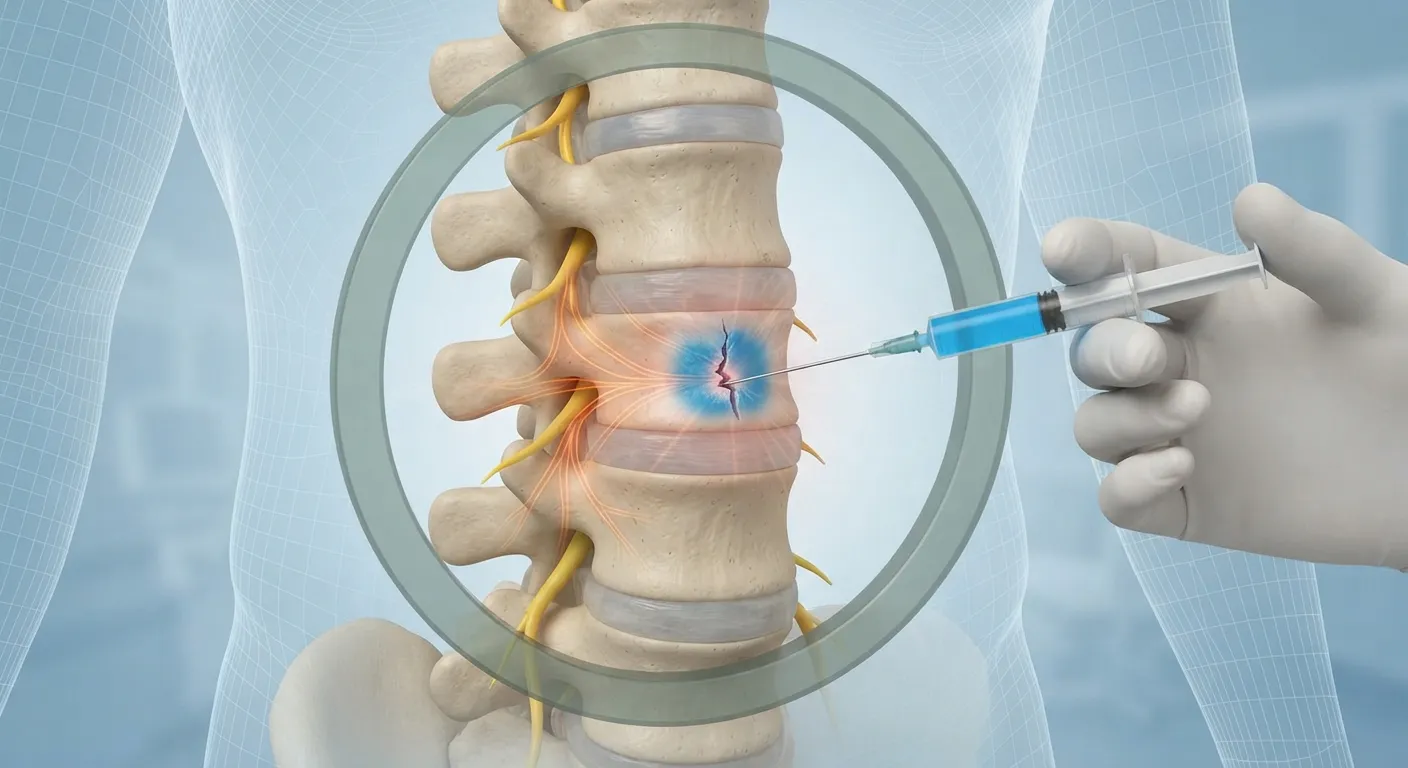
Provocative Discography is an image-guided diagnostic procedure used in carefully selected patients to evaluate whether one or more spinal discs may be contributing to persistent low back pain. It involves controlled injection of contrast into the disc and assessment of the patient's pain response along with imaging findings.
Provocative Discography is a specialized diagnostic procedure used to investigate whether a particular spinal disc may be a source of persistent low back pain. It is generally considered only after a detailed clinical assessment and appropriate imaging have not provided enough information about the suspected pain generator.
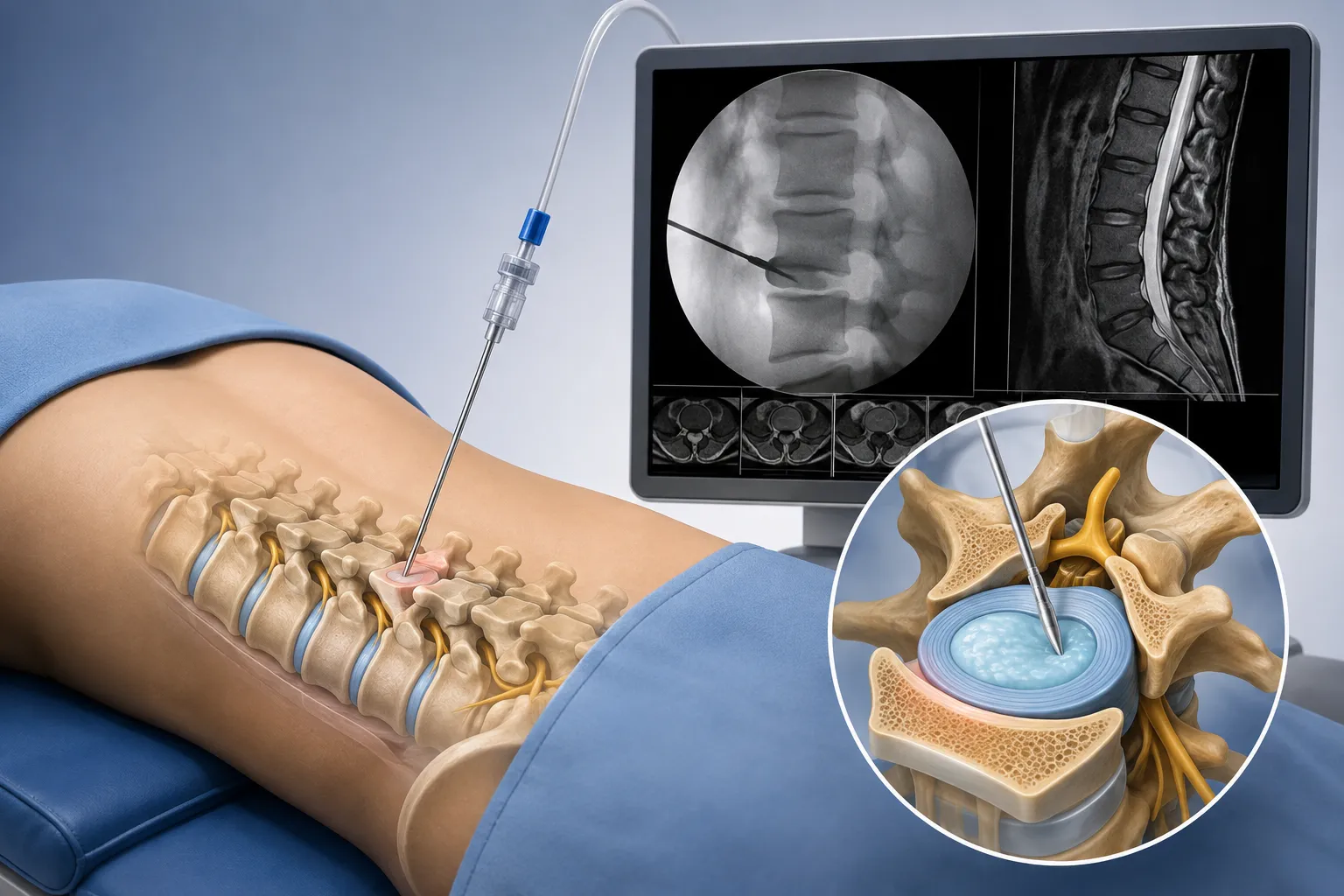
During discography, a thin needle is carefully guided into the centre of a selected spinal disc using fluoroscopy. Contrast material is then introduced into the disc while the physician observes the disc structure and monitors the patient's response.
An important part of the examination is determining whether the injection reproduces the patient's familiar, clinically relevant pain. Imaging findings are interpreted together with the pain response and the overall clinical picture rather than being considered in isolation.
Discography is most often considered when identifying a specific disc pain generator could influence further treatment planning. It is not a routine test for every patient with back pain and is not intended to be used simply because a disc appears abnormal on an MRI scan.
A carefully selected diagnostic discography may help the treating specialist better understand whether a suspected disc is clinically relevant and whether additional treatment options should be considered. The decision to perform the procedure should always be based on individual symptoms, examination findings, imaging and treatment history.
Your symptoms, physical examination, previous treatments and relevant MRI or CT findings are reviewed to determine whether discography is clinically appropriate.
You are positioned appropriately and the procedure area is prepared using sterile precautions. Local anaesthesia is used as appropriate to improve comfort.
Fluoroscopy is used to identify the appropriate spinal level and guide the needle carefully into the selected disc.
Contrast is introduced in a controlled manner while disc appearance and the patient's response are assessed to help determine whether the disc may be a clinically relevant pain generator.
In carefully selected cases, discography may provide additional information when the source of persistent disc-related pain remains uncertain.
The procedure allows a specific disc or group of discs to be evaluated rather than relying only on generalized imaging findings.
Fluoroscopy and contrast help the specialist assess the injected disc and its internal morphology during the examination.
The patient's familiar pain response during controlled injection is considered alongside clinical and imaging findings.
Findings may help the specialist decide whether further evaluation or a specific treatment pathway should be considered.
Results are interpreted in the context of your symptoms, examination, imaging and previous treatment rather than as a standalone test.
Discography may be considered in carefully selected patients with persistent low back pain when other clinical assessments and imaging studies have not sufficiently identified the suspected disc pain generator.
Your doctor may consider the procedure if:
Discography is a specialized diagnostic test and is generally reserved for carefully selected patients when determining the clinical relevance of a spinal disc may affect further treatment decisions.
May be considered in selected patients whose chronic low back pain remains unexplained after appropriate clinical evaluation and conservative treatment.
It may provide additional diagnostic information when the clinical picture suggests that a spinal disc could be contributing to the patient's pain.
In selected situations, discography may be considered when symptoms and imaging do not clearly identify the structure responsible for persistent pain.
Disc degeneration or other MRI findings may require clinical correlation because imaging abnormalities do not always mean that a disc is causing pain.
The diagnostic information may be useful when a more precise understanding of the suspected pain source could influence subsequent treatment decisions.
In specific clinical circumstances, discography may be considered as part of a broader evaluation when identifying a suspected disc pain generator is important for treatment planning.
Symptoms, physical findings, treatment history and relevant imaging are reviewed before considering diagnostic discography.
Image guidance helps the physician identify the appropriate spinal level and carefully position the needle during the diagnostic examination.
The goal is to answer a specific clinical question rather than use discography as a routine investigation for nonspecific back pain.
Findings are considered together with symptoms, examination results and imaging to support a more individualized treatment plan.
Careful preparation is important because discography is a specialized diagnostic procedure and is not routinely required for all types of back pain.
Your specialist will determine whether the diagnostic information expected from discography is likely to change your treatment plan.
After the procedure, you will usually be observed for an appropriate period before leaving the facility. Temporary soreness or an increase in the familiar pain may occur after the disc has been injected.
You may be advised to:
The findings from discography are interpreted together with your symptoms, examination and imaging. The results may help determine whether further diagnostic evaluation or treatment should be considered.
Discography is an invasive diagnostic procedure and should be performed only when there is a clear clinical reason for obtaining the information.
Temporary pain flare, soreness or discomfort can occur after disc injection.
Less common complications include infection, bleeding, nerve irritation, allergic reaction or headache related to spinal needle procedures.
One important concern is disc infection (discitis), which is uncommon but potentially serious. Appropriate sterile precautions are therefore essential.
Disc degeneration seen on imaging does not automatically mean that a disc is the source of pain, and discography cannot guarantee that a specific disc is responsible for every symptom.
Seek prompt medical attention if you develop fever, severe or rapidly worsening pain, new weakness, significant numbness or other concerning symptoms after the procedure.
If persistent low back pain continues despite
appropriate treatment and the source of pain remains
uncertain, a specialist assessment can help determine
whether diagnostic discography is appropriate for you.
Book an Appointment with Vedant Pain Management Clinic