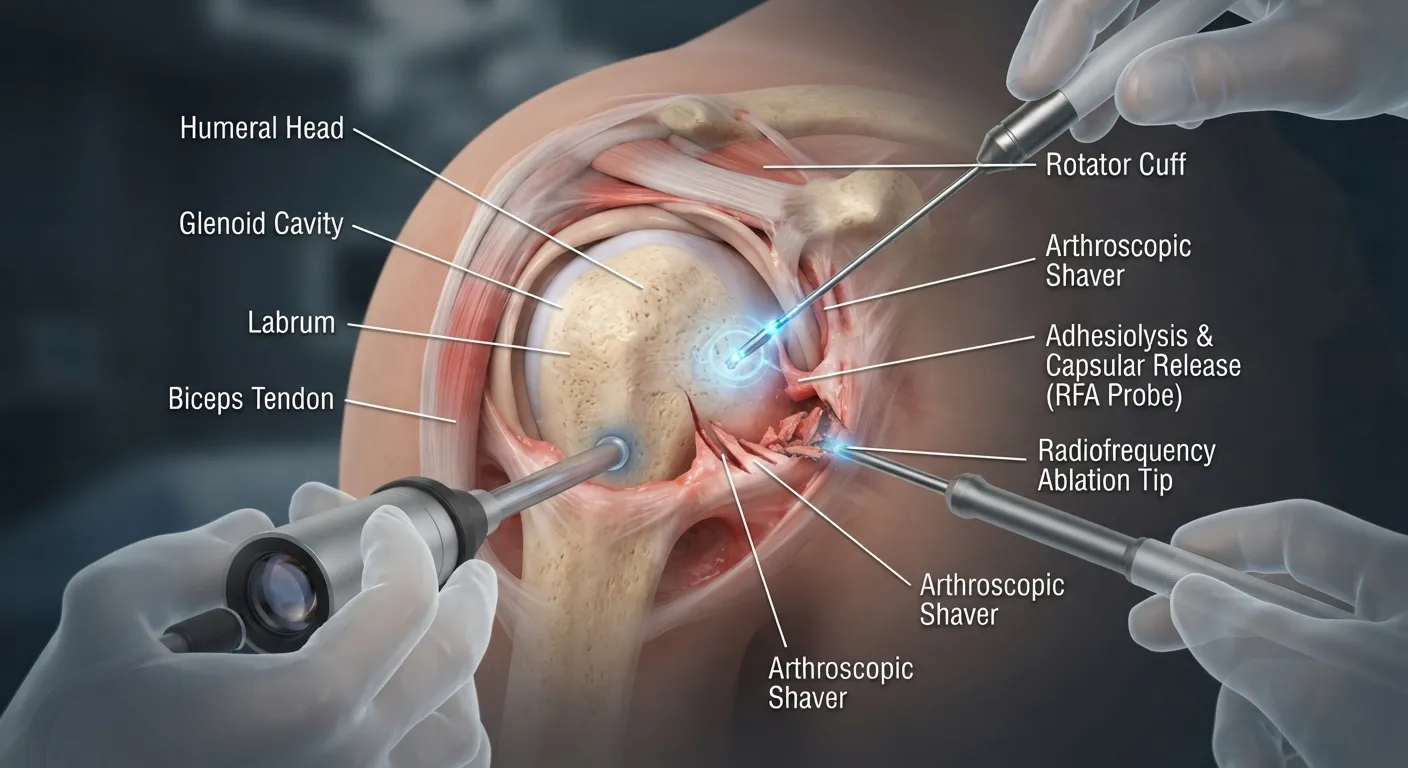
Targeted Treatment for Painful Shoulder Stiffness
Shoulder capsule release and adhesiolysis are minimally invasive approaches that may be considered for selected patients with persistent shoulder stiffness, particularly in adhesive capsulitis or frozen shoulder. When chronic pain remains a significant problem, radiofrequency treatment of selected sensory nerves may also be considered as part of an individualized pain management plan.
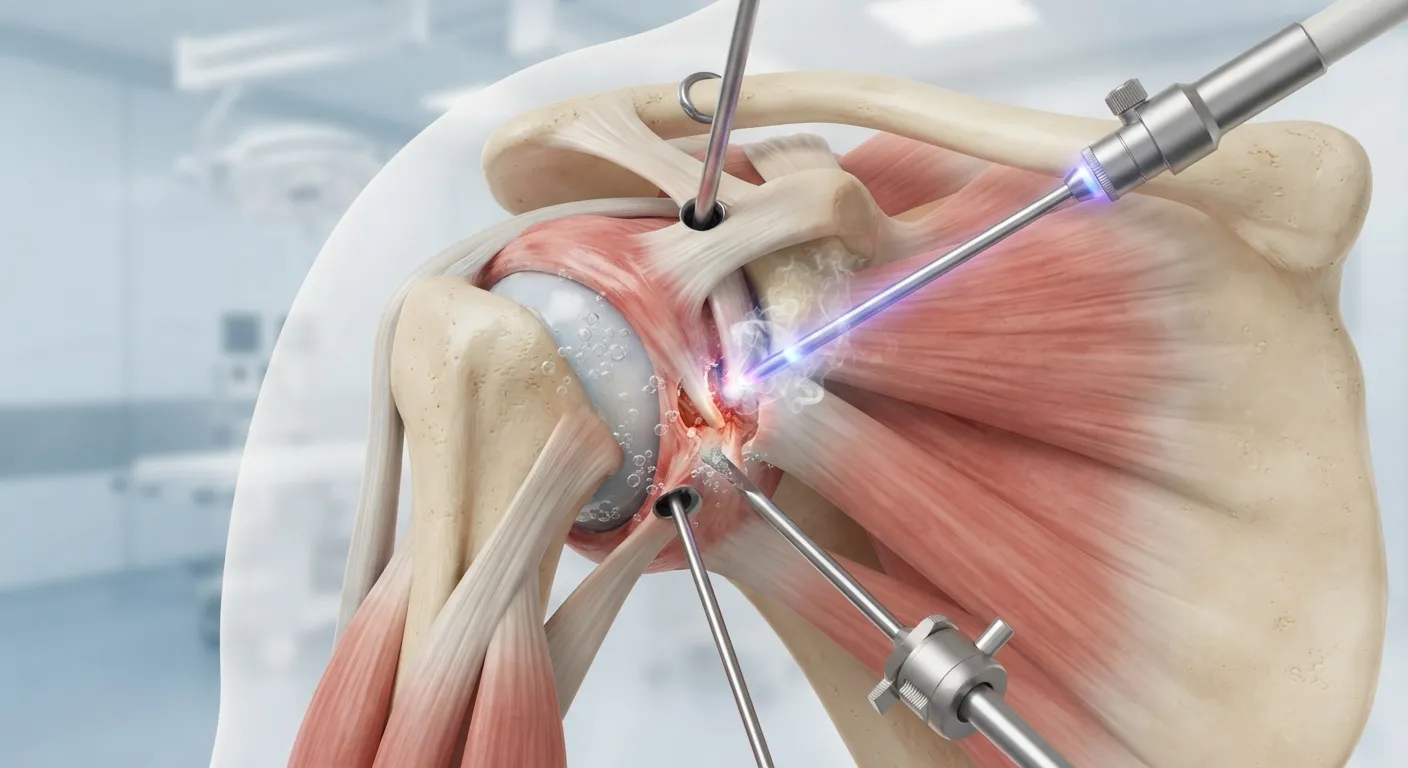
Shoulder capsule release and adhesiolysis are procedures intended to address painful restriction of movement that can occur when the tissues surrounding the glenohumeral joint become thickened, contracted or adherent. This is commonly seen in adhesive capsulitis, also known as frozen shoulder.
The goal of adhesiolysis or capsular treatment is to improve shoulder movement and reduce the mechanical restriction caused by capsular tightness. Depending on the clinical situation, image-guided joint distension, hydrodilatation or other minimally invasive techniques may be considered.
Radiofrequency treatment is different. RFA does not physically release the joint capsule. Instead, it uses controlled radiofrequency energy to target selected sensory nerve pathways involved in transmitting chronic shoulder pain.
In carefully selected patients, these approaches may be incorporated into a broader pain management strategy, particularly when pain continues to limit rehabilitation and shoulder function.
Treatment is individualized according to the cause of stiffness, severity of pain, range-of-motion restriction, previous treatment and the patient's overall clinical condition.
Your doctor evaluates pain, stiffness, active and passive range of motion and previous treatment. Imaging may be reviewed to rule out other causes of shoulder symptoms.
The patient is positioned appropriately and the treatment area is prepared using sterile technique. Local anaesthesia is used, with sedation considered when clinically appropriate.
When indicated, an image-guided technique such as joint distension or adhesiolysis may be used to address capsular restriction and support restoration of shoulder movement.
If appropriate for the patient's pain pattern, radiofrequency treatment may be directed at selected sensory nerve pathways around the shoulder to reduce transmission of chronic pain signals.
Targeted pain interventions may reduce persistent shoulder pain in appropriately selected patients.
Addressing capsular restriction may help improve range of motion when stiffness is caused by adhesive capsulitis.
Imaging helps the physician accurately identify the joint and selected treatment targets.
When RFA is indicated, selected sensory nerve pathways can be treated to reduce pain transmission.
Image-guided interventions use small needles and specialized instruments rather than open shoulder surgery.
Reducing pain and improving movement may make it easier for selected patients to participate in prescribed rehabilitation.
Shoulder capsule treatment or targeted RFA may be considered after a detailed assessment when pain, stiffness or restricted movement continues to interfere with daily activities despite appropriate conservative care.
Your doctor may consider an intervention if:
Treatment is selected according to the underlying cause of shoulder pain and stiffness. Adhesiolysis primarily addresses capsular restriction, while RFA may be considered separately for selected chronic pain patterns.
Frozen shoulder can cause progressive pain and marked restriction of passive and active shoulder movement. Capsular treatment may be considered in selected persistent cases.
Selected patients with persistent shoulder pain despite conservative treatment may be evaluated for targeted pain interventions.
Persistent stiffness after shoulder surgery may require assessment for capsular contracture, scar tissue or other causes before selecting treatment.
When pain prevents adequate participation in prescribed shoulder rehabilitation, targeted pain management may be considered as part of a broader treatment plan.
Patients who continue to experience significant pain despite medication, physiotherapy and appropriate injections may require further specialist assessment.
RFA may be discussed for carefully selected chronic shoulder pain when the relevant sensory nerve pathways are considered an important contributor to symptoms.
Your symptoms, range of motion, examination findings and relevant imaging are reviewed before selecting an appropriate treatment approach.
Image guidance helps improve accuracy when accessing the shoulder joint or targeting selected sensory nerve pathways.
Treatment is selected according to whether the main problem is capsular stiffness, joint pain, nerve mediated pain or another shoulder condition.
The treatment plan considers your symptoms, functional goals, previous therapies and response to diagnostic interventions.
A detailed assessment is performed before treatment to identify the source of pain and determine whether the primary problem is capsular stiffness, joint pathology, nerve-mediated pain or another condition.
Appropriate conservative treatment and rehabilitation remain important parts of care and are considered before proceeding with an intervention.
Recovery depends on the specific procedure performed. After capsular treatment, maintaining the shoulder's improved range of motion through prescribed rehabilitation is particularly important.
You may be advised to:
Pain relief and improvement in movement vary between patients. The underlying shoulder condition continues to require appropriate management even after a successful pain intervention.
Temporary pain, soreness, bruising or swelling may occur around the treatment area following an injection, adhesiolysis or RFA procedure.
Other potential complications include infection, bleeding, nerve irritation or injury and unintended tissue injury.
Shoulder RFA requires careful nerve targeting because some nerves around the shoulder also have motor functions. Treatment planning should therefore account for relevant anatomy.
Capsular adhesiolysis does not guarantee permanent restoration of shoulder movement. Stiffness can recur, particularly if the underlying condition remains active or rehabilitation is inadequate.
RFA does not physically release the joint capsule and does not repair damaged cartilage, rotator cuff tissue or other structural abnormalities.
Seek medical attention promptly if you develop fever, increasing redness or swelling, severe worsening pain, new weakness or other concerning symptoms after the procedure.
Persistent shoulder pain and restricted movement can
interfere with sleep, work, exercise and everyday
activities. A specialist assessment can help identify
whether capsular treatment, targeted nerve pain
management or another approach is appropriate.
Book an Appointment with Vedant Pain Management Clinic