Home/ Treatments/ Fluoroscopy Guided Treatments/ Transforaminal Epidural Adhesiolysis
Fluoroscopy Guided

Transforaminal Epidural Adhesiolysis

Targeted Treatment for Persistent Spinal Nerve Pain

Transforaminal Epidural Adhesiolysis is a minimally invasive, image-guided procedure designed to address persistent spinal radicular pain when epidural scar tissue or adhesions may be restricting medication delivery around an irritated nerve root. The procedure combines targeted access with adhesiolysis and medication delivery to the affected epidural region.
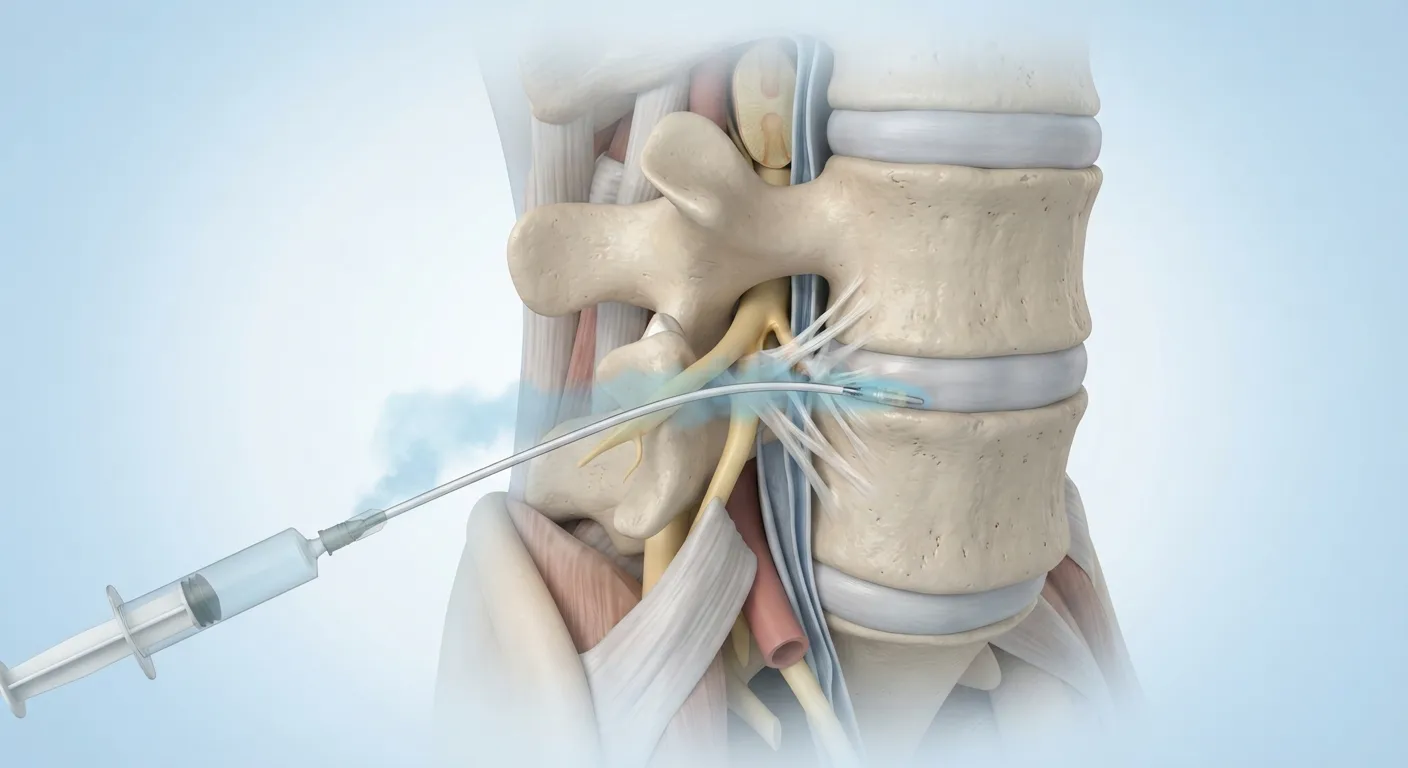
Fluoroscopy guided transforaminal epidural adhesiolysis for persistent spinal nerve pain
Treatment Type
Epidural Adhesiolysis
Target Area
Spinal Nerve Root
Guidance
Fluoroscopy Guided
Procedure
Minimally Invasive
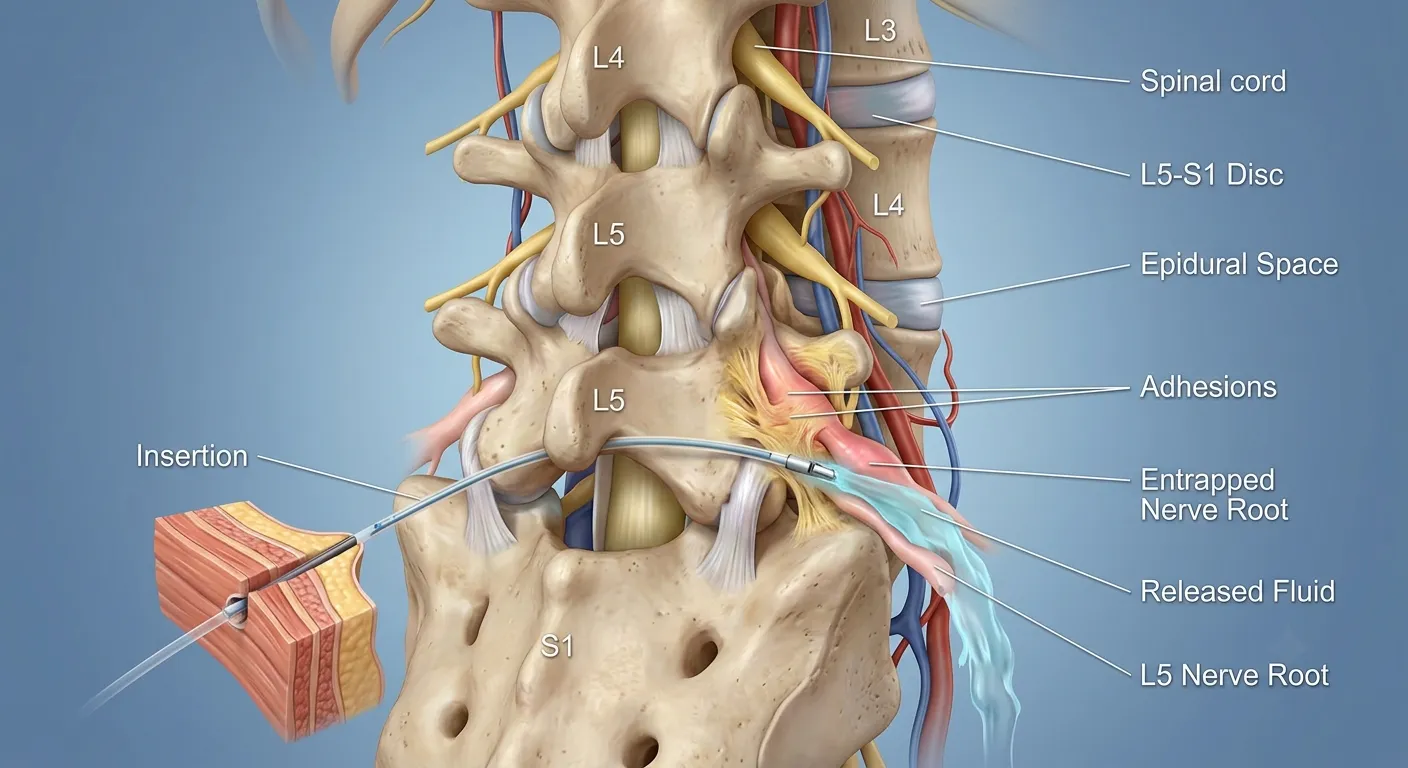
Transforaminal epidural adhesiolysis targeting an irritated spinal nerve root

What Is Transforaminal Epidural Adhesiolysis?

Transforaminal Epidural Adhesiolysis is an advanced minimally invasive pain procedure designed to deliver treatment directly toward a selected spinal nerve root. It may be considered when persistent radicular pain is associated with epidural fibrosis, adhesions or other factors that may limit medication reaching the affected area.

Epidural adhesions can develop after spinal surgery, inflammation, disc-related injury or other spinal conditions. These scar-like changes may contribute to persistent pain in some patients and can make conventional epidural medication delivery less effective.

In a transforaminal approach, the specialist accesses the epidural space through the neural foramen, the opening through which the spinal nerve exits the spinal canal. Fluoroscopy is used to identify the relevant anatomy and guide the needle toward the selected nerve root.

Once appropriate positioning is confirmed, contrast may be used to assess the injection pattern. The physician may then perform targeted adhesiolysis and administer selected medications around the affected nerve root according to the patient's condition and procedural plan.

The goal is to improve access to the affected epidural region, reduce inflammation and potentially improve pain control. The procedure does not remove the underlying degenerative spinal condition and is not a guaranteed cure for chronic back or leg pain.

Targets a selected spinal nerve root
Addresses selected epidural adhesions
Transforaminal approach
Fluoroscopy-guided placement
Targeted medication delivery
Minimally invasive technique
01
Clinical Assessment

Your pain pattern, neurological findings, previous treatments and relevant imaging are reviewed to determine whether targeted epidural adhesiolysis is appropriate.

02
Positioning & Preparation

You are positioned appropriately and the treatment area is cleaned using sterile precautions. Local anaesthesia is used as appropriate to improve comfort.

03
Transforaminal Access

Fluoroscopy is used to identify the relevant neural foramen and guide the needle toward the selected epidural and nerve-root region.

04
Adhesiolysis & Medication

After appropriate needle positioning and contrast confirmation, targeted adhesiolysis and medication delivery are performed according to the planned technique and individual clinical needs.

Potential Benefits of Transforaminal Epidural Adhesiolysis
Targeted Radicular Pain Relief

May help reduce persistent pain that travels from the spine into the buttock, leg or arm when an irritated nerve root is involved.

Focused Nerve-Root Treatment

The transforaminal approach allows treatment to be directed toward a selected spinal nerve-root region.

Addressing Epidural Adhesions

In appropriately selected patients, adhesiolysis may help address scar tissue or adhesions that can interfere with treatment around the affected nerve.

Fluoroscopy-Guided Precision

Fluoroscopy helps the physician visualize relevant spinal anatomy and guide needle placement in a controlled manner.

Minimally Invasive Approach

The procedure uses needle-based access rather than open spinal surgery and is performed with image guidance.

Support for Rehabilitation

If pain decreases, some patients may find it easier to participate in appropriate exercises, physiotherapy and daily activities.

Results vary between patients. Epidural adhesiolysis does not remove every cause of chronic spinal pain and does not guarantee permanent relief. The expected benefit depends on the underlying diagnosis and individual response.
You May Be a Candidate If:

Transforaminal Epidural Adhesiolysis may be considered for selected patients with persistent radicular pain when conventional treatment has not provided adequate relief and epidural scarring or adhesions may be contributing to symptoms.

Your doctor may consider the procedure if:

  • You have persistent nerve-related back or neck pain that radiates into an extremity.
  • Symptoms are consistent with lumbar or cervical radicular pain.
  • You have a history of spinal surgery or another condition associated with possible epidural fibrosis.
  • Previous epidural or conservative treatments have provided insufficient or short-lived relief.
  • Clinical findings and imaging support a suitable nerve-root target.
  • Your overall health and medication history allow the procedure to be considered safely.
Not every patient with persistent back or leg pain has epidural adhesions, and adhesiolysis is not appropriate for every type of spinal pain. Careful diagnosis and patient selection are essential.

Conditions Where Transforaminal Epidural Adhesiolysis May Be Considered

Transforaminal Epidural Adhesiolysis is generally considered for selected patients with persistent spinal nerve-related pain, particularly when epidural fibrosis or adhesions may contribute to ongoing symptoms.

Persistent Pain After Spine Surgery

Selected patients with persistent or recurrent radicular pain after spinal surgery may develop epidural fibrosis that can contribute to symptoms.

Lumbar Radiculopathy

Irritation of a lumbar nerve root can cause pain, tingling or numbness that travels from the lower back into the buttock or leg.

Persistent Sciatica

Selected patients with ongoing sciatic pain may be evaluated for targeted transforaminal treatment when an appropriate nerve-root source is identified.

Cervical Radicular Pain

In selected cases, persistent cervical nerve-root pain may be evaluated for a transforaminal approach based on anatomy, diagnosis and procedural risk.

Epidural Fibrosis

Scar tissue in the epidural space may develop after surgery or inflammation and can sometimes be associated with persistent nerve-related pain.

Chronic Radicular Pain

Persistent radiating spinal pain that has not responded adequately to appropriate conservative treatment may require a more targeted pain-management approach.

Why Choose Vedant Pain Management Clinic for Epidural Adhesiolysis?

Detailed Assessment

Your pain pattern, neurological findings, previous procedures and relevant imaging are reviewed before selecting the treatment approach.

Fluoroscopy Guidance

Image guidance helps identify the relevant spinal anatomy and supports controlled transforaminal needle placement.

Targeted Treatment Planning

The procedure is planned around the suspected pain generator, relevant imaging findings and individual anatomy.

Personalized Pain Care

The procedure is integrated into an individualized treatment plan that may include rehabilitation, physiotherapy and other appropriate pain-management options.

Before Epidural Adhesiolysis

A detailed assessment is performed to identify the likely source of persistent nerve-related pain and determine whether epidural adhesions may be clinically relevant.

  • Review of pain distribution and duration
  • Neurological examination
  • Review of previous spinal procedures
  • Assessment of previous injection response
  • Review of MRI or other relevant imaging
  • Medication and allergy review
  • Assessment of bleeding and infection risks
  • Discussion of benefits, limitations and risks

Your specialist will determine whether the expected benefits of targeted adhesiolysis outweigh the potential risks for your specific condition.

Fluoroscopy guided transforaminal epidural adhesiolysis procedure
After Epidural Adhesiolysis

After the procedure, you are observed for an appropriate period before discharge. Temporary soreness, pressure or changes in sensation may occur depending on the treated region and medications used.

You may be advised to:

  • Rest for the recommended period
  • Avoid strenuous activity as advised
  • Follow medication instructions carefully
  • Gradually resume normal activities
  • Continue prescribed rehabilitation or exercises
  • Monitor your symptoms and follow up as advised

The response to treatment is assessed based on changes in pain, function and other symptoms. Further treatment is determined according to your underlying diagnosis and response rather than assuming that additional procedures will always be required.

Risks & Considerations

Epidural adhesiolysis is a minimally invasive procedure, but it carries risks similar to other spinal injections, with additional considerations related to the adhesiolysis technique.

Temporary soreness, bleeding, headache or medication-related effects can occur.

Infection, dural puncture, nerve irritation or injury and allergic reactions are uncommon but recognized complications.

Transforaminal procedures require particular care because the needle is advanced near a spinal nerve root and nearby blood vessels. Image guidance and appropriate safety precautions are therefore important.

The procedure may not provide lasting relief, and the degree of benefit varies according to the underlying condition and individual response.

Seek prompt medical attention if you develop new or worsening weakness, significant numbness, fever, severe headache, loss of bladder or bowel control, or other concerning neurological symptoms after treatment.

Frequently Asked Questions

What is Transforaminal Epidural Adhesiolysis?
Transforaminal Epidural Adhesiolysis is a minimally invasive procedure that uses a transforaminal approach to access a selected spinal nerve-root region. It may combine adhesiolysis with targeted medication delivery when epidural fibrosis or adhesions may contribute to persistent radicular pain.
What is epidural fibrosis?
Epidural fibrosis refers to scar-like tissue that can develop in the epidural space, particularly after spinal surgery. In some patients, it may be associated with persistent nerve-related pain, although the presence of scar tissue does not automatically mean it is the cause of symptoms.
Why is a transforaminal approach used?
The transforaminal approach provides access through the neural foramen toward a selected spinal nerve-root region. This can allow treatment to be directed toward a specific symptomatic level when clinically appropriate.
Is Transforaminal Epidural Adhesiolysis a surgery?
No. It is a minimally invasive, needle-based pain procedure performed under image guidance. It does not involve an open surgical incision or removal of spinal bone or disc tissue.
Is the procedure performed under fluoroscopy?
Yes. Fluoroscopy is commonly used to identify the relevant spinal anatomy, guide needle placement and assist with contrast confirmation before medication or other procedural steps are performed.
Who may benefit from epidural adhesiolysis?
It may be considered for selected patients with persistent radicular pain, particularly when there is a history of spinal surgery or other findings suggesting epidural fibrosis or adhesions and conventional treatment has not provided sufficient relief.
Can epidural adhesiolysis help with sciatica?
It may be considered in selected patients with persistent sciatica when a specific spinal nerve-root source is identified and epidural adhesions may be contributing to the symptoms. It is not appropriate for every case of sciatica.
Is Transforaminal Epidural Adhesiolysis safe?
Like other spinal procedures, it has potential risks. These include bleeding, infection, headache, nerve irritation or injury and medication-related complications. Transforaminal procedures require careful image guidance and appropriate safety precautions.
How long does pain relief last?
The duration of relief varies significantly. Some patients may experience meaningful improvement for a period of time, while others may have limited or temporary benefit. The outcome depends on the underlying pain generator and individual response.
Can epidural adhesiolysis be repeated?
A repeat procedure may be considered in selected patients who experienced meaningful benefit and have an ongoing clinical indication. The decision should be individualized based on treatment response, diagnosis, risks and other available options.

Explore Targeted Treatment for Persistent Nerve Pain

If persistent back, neck, leg or arm pain continues despite appropriate treatment, a detailed assessment can help determine whether Transforaminal Epidural Adhesiolysis is appropriate for your condition.
Book an Appointment with Vedant Pain Management Clinic