

PRP Injection for Knee: Cost, Success Rate and Side Effects
If you have been told that your knee is wearing out, a friend may have suggested PRP. It is promoted as a natural treatment that uses your own blood, and it sounds appealing if you want to avoid surgery. But the questions people actually ask are practical ones: what is the PRP injection for knee cost, what is the real PRP injection success rate, and are there PRP injection side effects to worry about?
This guide answers those questions without exaggeration. You will also find a plain comparison of PRP and hyaluronic acid injections, so you can have a better conversation with your doctor.
What Is a PRP Injection?
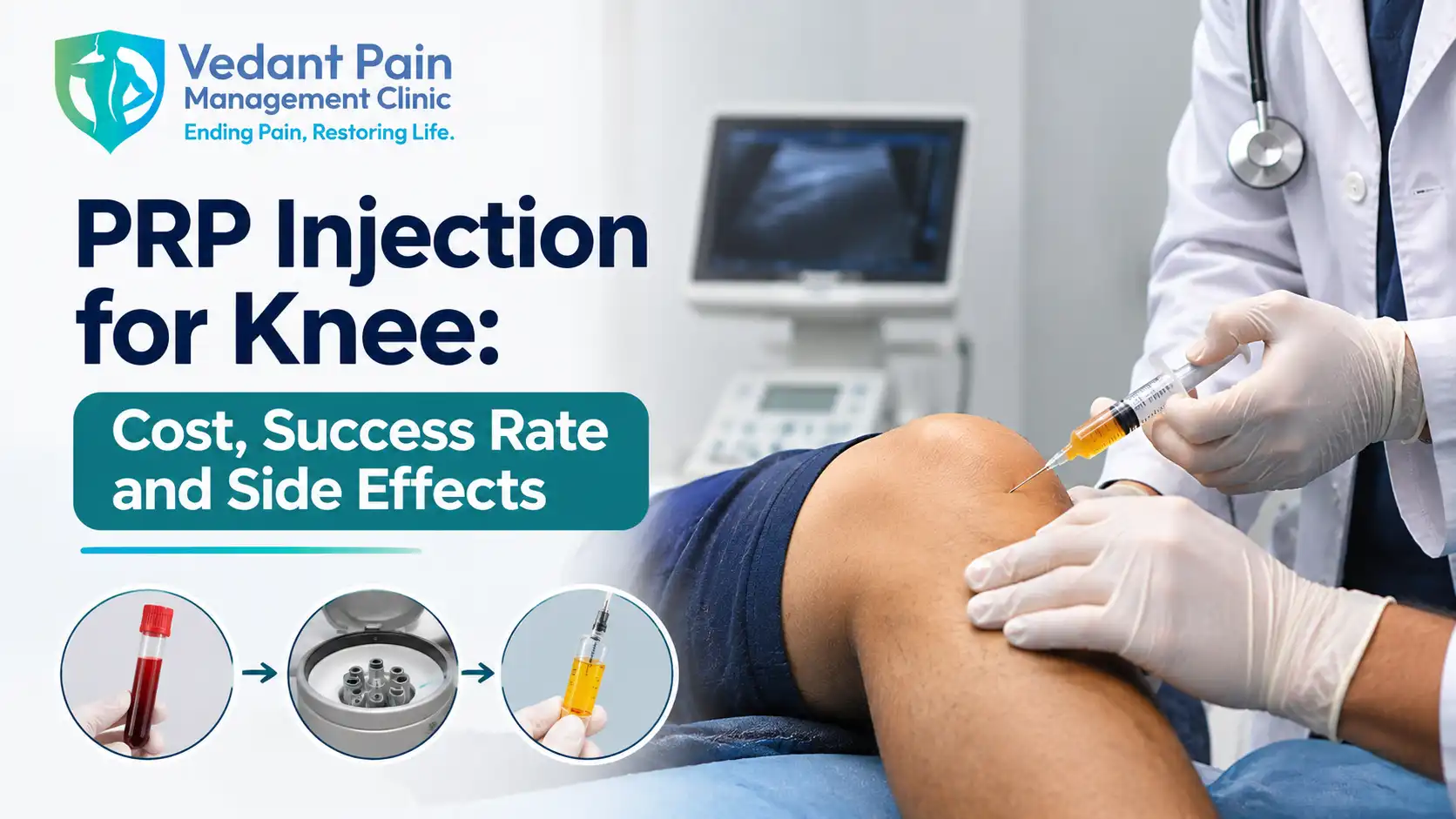
PRP stands for platelet-rich plasma. A small amount of your blood is drawn, usually from your arm, and spun in a centrifuge to concentrate the platelets. Platelets carry growth factors that play a part in healing and in calming inflammation. The concentrated plasma is then injected into the knee joint, ideally with ultrasound guidance so that it reaches the right spot.
Because the material comes from your own body, there is no risk of rejection. It is not a cure for arthritis, and it does not grow back cartilage that has worn away. The aim is to reduce pain and improve function. Our page on PRP injection in Faridabad explains how we use it.
Who May Benefit From PRP for the Knee?
- People with mild to moderate knee osteoarthritis who still have some joint space
- Younger or active patients who want to delay more invasive options
- Some people with tendon problems around the knee
- Patients who have not had enough relief from exercises, weight loss and medicines
Who may not be suitable
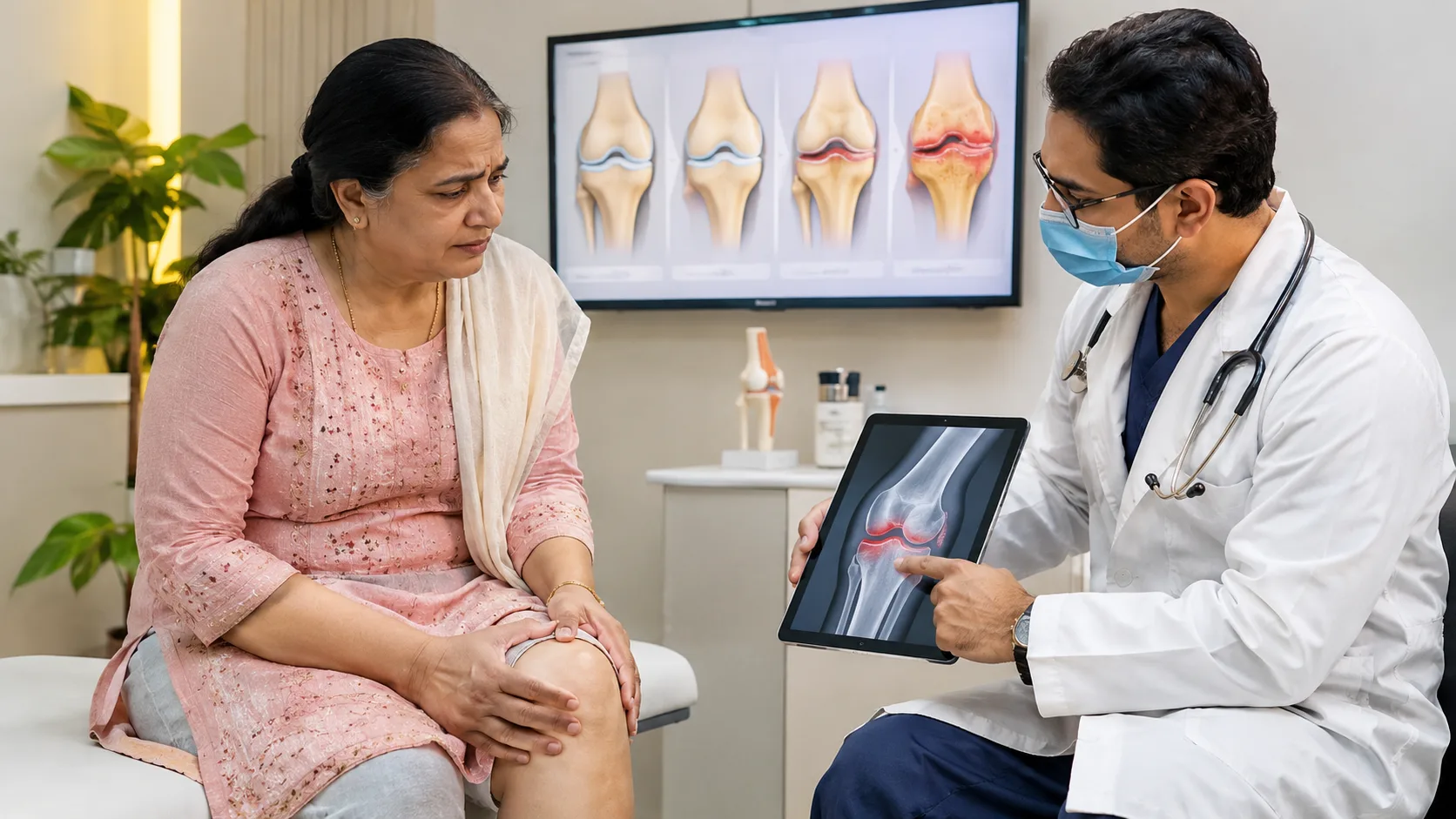
PRP is generally not advised when there is an active infection, a blood disorder or very low platelet count, or when you take blood-thinning medicines that cannot be adjusted. It is also less likely to help a knee that is badly worn with little cartilage left or one that is severely deformed. In those cases other options, including a surgical opinion, may be better. You can read about the wider choices in our guide to knee osteoarthritis and chronic knee pain treatment.
PRP Injection for Knee Cost: What Decides the Price
There is no single price for PRP, because several factors change the total:
- The preparation system. Different kits and centrifuge systems produce different concentrations, and the single-use kit is a real cost.
- The number of injections in the plan.
- Whether ultrasound guidance is used to place the injection accurately.
- The setting, such as a clinic procedure room or a hospital day-care unit.
- The specialist's experience and any follow-up that is included.
- Whether one or both knees are treated.
PRP is often not covered by health insurance because it is considered a regenerative treatment, so check your policy before assuming coverage. When you compare estimates, ask whether the quote is per injection or for the full plan, and what exactly is included. We give a clear estimate after assessing your knee.
PRP Injection Success Rate: What the Evidence Really Says
People want a percentage, but an honest answer cannot reduce PRP to one number. Studies suggest that PRP can reduce pain and improve function in many people with mild to moderate knee osteoarthritis, and that the benefit often builds over several weeks. It is not a guaranteed result, and some patients do not respond. Success depends on several things:
- How advanced the arthritis is. Earlier stages tend to respond better than severe damage.
- Age, body weight and activity level
- The quality and concentration of the PRP preparation
- Whether the injection is accurately placed
- Whether you combine it with exercise and weight management
For many patients, the benefit lasts for several months and sometimes up to a year, after which a repeat can be considered. It is more useful to define success as less pain, better walking and an easier daily routine, and to review that at a few months. If your doctor promises a cure or a fixed success percentage, ask for the evidence.
PRP Injection Side Effects
PRP is generally well tolerated, and serious problems are uncommon. Possible effects include:
- Soreness, swelling or stiffness in the knee for a day or two, sometimes called a post-injection flare
- Bruising or tenderness where blood was drawn from the arm
- A feeling of warmth or pressure in the joint
- Rarely, infection or bleeding in the joint
- Rarely, irritation of a small nerve near the injection site
Because the material is your own blood, allergic reactions to PRP are rare. Your doctor may ask you to pause certain anti-inflammatory medicines around the procedure, so tell the team about every medicine you take.
PRP vs Hyaluronic Acid: Which Is Better?
PRP and hyaluronic acid are the two injections people compare most often. They work in different ways.
- What it is. Hyaluronic acid is a gel-like substance that mimics the joint's natural lubricant. PRP is a concentrate of your own platelets and growth factors.
- How it works. Hyaluronic acid cushions and lubricates the joint. PRP aims to calm inflammation and support the joint's environment.
- Duration. Some studies suggest PRP may give longer relief in mild to moderate arthritis, but the evidence is mixed, and individual response varies.
- Cost. PRP often costs more because of the preparation, while hyaluronic acid depends on the product used.
- Best fit. The choice depends on the stage of arthritis, your goals, your budget and your doctor's experience.
Steroid injections are a third option. They act quickly on inflammation but are used sparingly because repeated doses can affect joint tissue. A good doctor will explain all three and recommend what fits your knee.
What Happens During a PRP Injection?
- Your blood is drawn from the arm, which takes a few minutes.
- The blood is spun in a centrifuge to concentrate the platelets.
- The knee skin is cleaned and numbed with local anaesthetic.
- The PRP is injected into the joint, preferably under ultrasound guidance.
- You rest briefly and go home the same day.
Recovery and Aftercare
Expect some soreness for a day or two. Rest the knee for the first day or so and avoid heavy activity for a few days. Gentle walking is usually fine. Strengthening exercises begin as advised, because stronger thigh and hip muscles take load off the knee and help the result last. Avoid high-impact activity until your doctor says it is safe, and follow any medicine instructions given to you.
How to Get the Most From PRP
- Keep your weight in a healthy range, since each extra kilo adds load to the knee
- Do a regular strengthening and flexibility routine
- Wear supportive footwear and avoid repeated heavy squatting or stair overload
- Attend the follow-up visit so that progress is tracked
PRP, Genicular RFA or Surgery: How to Think About It
PRP aims to support the joint, while genicular nerve radiofrequency treats the nerves that carry the pain, and joint replacement resurfaces a badly damaged joint. They suit different situations. If PRP does not help, or your joint is too damaged, you may want to read about the knee replacement alternative with genicular RFA. Our overview of knee pain treatment in Faridabad and our page on regenerative medicine give a wider picture.
Questions to Ask Before You Agree to PRP
- What is the stage of my knee arthritis, and is PRP likely to help at this stage?
- How many injections do you recommend, and what will the total cost be?
- Will the injection be placed under ultrasound guidance?
- What can I expect in the first week, and what should I avoid?
- What is the plan if I do not respond?
PRP Consultation in Faridabad and Delhi NCR
Our clinic is in Sector 9, Faridabad, and patients also come from Delhi, Noida and Gurugram. Bring your knee X-ray or MRI and a list of your medicines. We will examine your knee, explain whether PRP suits you and give you a clear plan.
Address: House No. 21, Sector 9, Opposite Sector 9 Huda Market, Faridabad, Haryana 121006
Phone: +91 8171244512
Visiting hours: 9 AM to 7 PM
The Bottom Line
PRP can be a reasonable option for mild to moderate knee arthritis, but it is not a miracle and it is not for every knee. Understand what drives the cost, ask what success means in your case, know the side effects, and compare it fairly with hyaluronic acid and other treatments. A careful assessment matters more than any single injection.
Written by Dr. Mohit Gupta, Interventional Pain Physician, Vedant Pain Management Clinic, Faridabad. This article is for general information and is not a substitute for medical advice.