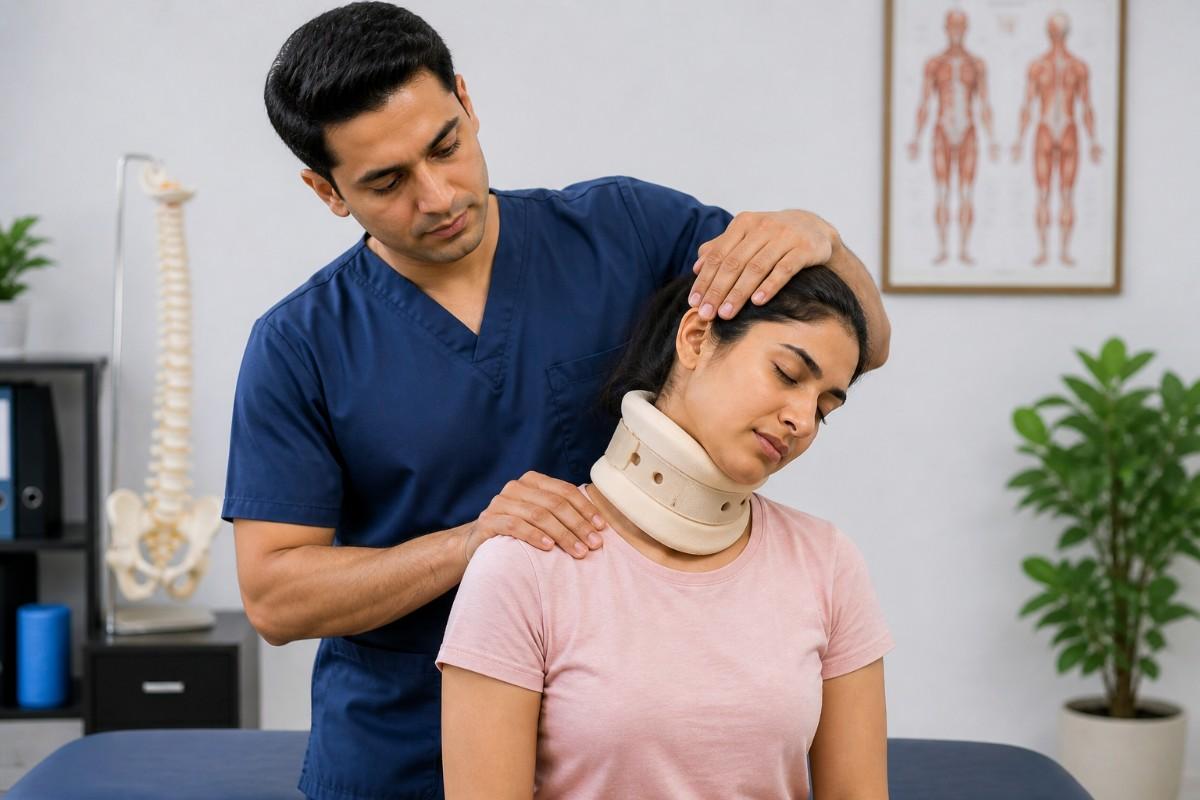
That sudden pull in your neck. The stiffness that makes turning your head uncomfortable. A neck sprain can disrupt your routine more than you expect. If you are looking for the right treatment of neck sprain, the good news is that most cases improve with the right care and guidance.
In my experience, people often panic or ignore it completely. Both approaches can slow recovery. The key is to act early and follow a balanced plan.
What is a Neck Sprain?
A neck sprain happens when the ligaments in your neck are stretched or torn.
It can be caused by:
- Sudden movement or jerks
- Poor posture over time
- Sleeping in an awkward position
- Minor injuries or strain
I have noticed that even simple daily habits can lead to this condition if repeated over time.
Common Symptoms of Neck Sprain
You may experience:
- Pain while moving your neck
- Stiffness and reduced flexibility
- Muscle tightness
- Headaches starting from the neck
- Mild swelling in some cases
Recognizing these early helps in faster recovery.
Treatment of Neck Sprain That Actually Works
1. Rest and Activity Modification
Give your neck time to recover.
Avoid sudden movements and heavy activities, but do not stay completely inactive. Gentle movement is important.
2. Cold and Heat Therapy
- Use cold packs in the first 24 to 48 hours to reduce inflammation
- Switch to heat therapy to relax muscles and improve blood flow
When I tried this approach for a mild strain, the stiffness reduced significantly within a few days.
3. Pain Relief Medications
Over-the-counter medicines can help manage discomfort.
- Mild pain relievers
- Anti-inflammatory medications
Use them carefully and only when needed.
4. Gentle Neck Exercises
Once the acute pain reduces, movement becomes essential.
Simple exercises include:
- Neck tilts side to side
- Slow rotations
- Chin tucks
- Shoulder rolls
These help restore flexibility and prevent stiffness.
5. Posture Correction
Poor posture can delay healing.
- Keep your screen at eye level
- Sit with proper back support
- Avoid looking down at your phone for long
In my experience, correcting posture speeds up recovery.
6. Physiotherapy
For moderate or persistent sprains, guided therapy is very effective.
At Vedant Pain Management Clinic, physiotherapy programs are tailored to improve strength, flexibility, and posture.
7. Advanced Non-Surgical Treatments
If pain continues, targeted treatment may be needed.
These include:
- Manual therapy
- Trigger point therapy
- Pain management techniques
At Vedant Pain Management Clinic, these approaches focus on long-term recovery.
Recovery Timeline
Most neck sprains improve within:
- Mild cases: a few days to a week
- Moderate cases: 2 to 3 weeks
- Severe cases: longer with treatment
A study in the Spine Journal suggests that early intervention significantly reduces recovery time and prevents chronic pain.
Real-Life Insight
I once worked with someone who ignored a mild neck sprain thinking it would go away on its own. Over time, stiffness increased and recovery took longer.
Once they followed a proper treatment plan, improvement became noticeable within weeks.
This is something I have seen often. Early care makes a big difference.
What to Avoid During Recovery
- Sudden neck movements
- Heavy lifting
- Poor posture
- Long hours without breaks
- Ignoring pain signals
Avoiding these mistakes helps in faster healing.
When Should You See a Specialist?
Do not delay if you notice:
- Pain lasting more than one to two weeks
- Severe stiffness
- Pain spreading to shoulders or arms
- Tingling or numbness
At Vedant Pain Management Clinic, early diagnosis ensures better outcomes and prevents complications.
Daily Habits to Prevent Neck Sprain
Prevention is simple but powerful.
Follow these habits:
- Maintain proper posture
- Take regular breaks from screens
- Use a supportive pillow
- Stay active
- Strengthen neck and upper back muscles
In my experience, these small changes reduce the chances of recurring pain.
Final Thoughts
A neck sprain may seem minor, but it can affect your daily life if ignored.
In my experience, the best results come from combining rest, movement, and expert care.
If your pain is not improving or affecting your routine, getting the right support from Vedant Pain Management Clinic can help you recover safely and return to normal activities without discomfort.